Board Watch: Beecher makes the rounds as TPZ, EDC also tackle their own Town priorities
The $118.5 million school proposal took significant time at both meetings, while TPZ addressed housing and land-use matters and EDC members differed over Town growth versus a focus on the business district

Board Watch is a recurring feature designed to provide a concise walk-through of activity as we keep track of the week's civic work. Longer-form articles will appear when issues warrant deeper coverage.
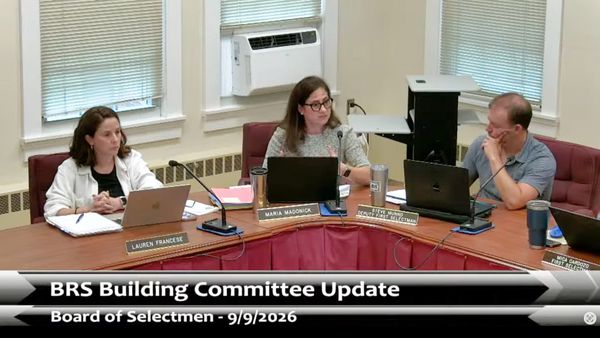
The proposed $118.5 million Beecher Road School project was the subject of an intensive round of presentations to Town commissions last week, with Selectman Maria Madonick presenting the Building Committee’s case before several commissions ahead of the Oct. 13 referendum.
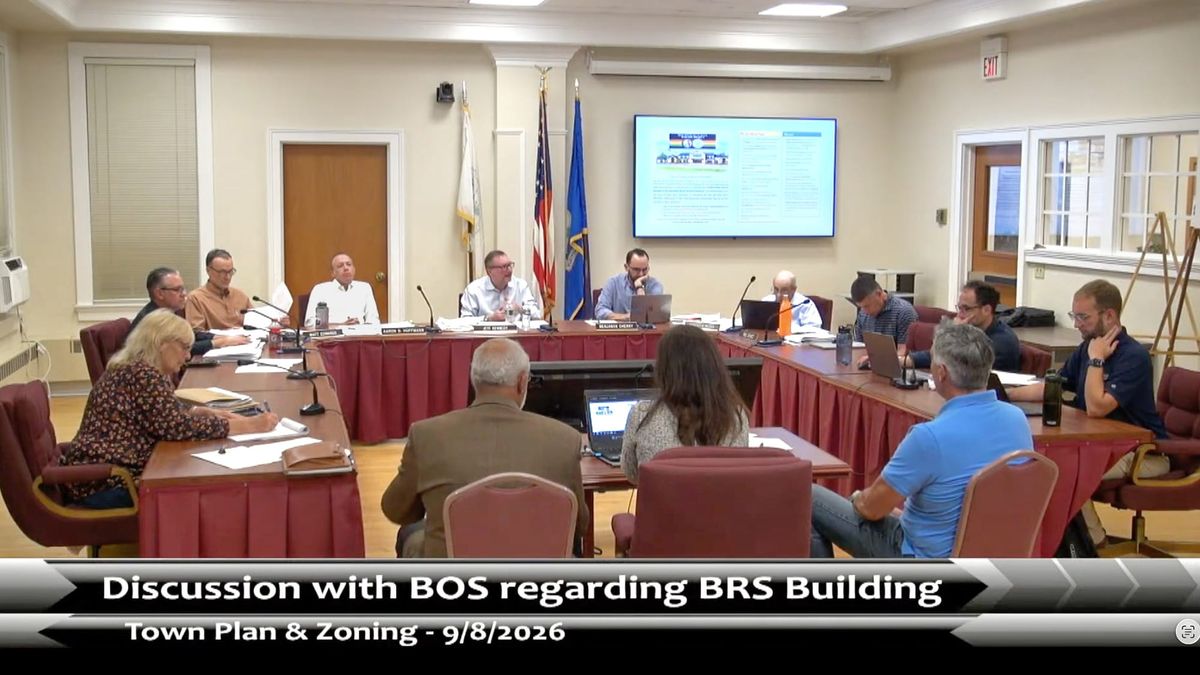
On Tuesday, Sept. 8, project representatives Madonick, First Selectman Mica Cardozo and Building Committee Chairman Martin Halprin, went first to the Recreation, then the Human Services, and finally the Town Plan and Zoning Commission. The following night, the school proposal again occupied substantial time at the Board of Selectmen meeting (see separate article). And on Thursday, Madonick brought the presentation to the Economic Development Commission.
At EDC, Madonick explained that the Building Committee wanted a representative to visit all of the Town's boards and commissions, both to reach residents who are active in Town government and because different commissions may intersect with the project at different points. The result was a concentrated three-night outreach push this week in which many of the same project themes and talking points were repeated before audiences with very different responsibilities.
TPZ stood apart from the other stops. Beecher was not before that Commission simply for an informational update: as a result of a referral by the Board of Selectmen, TPZ had a specific statutory assignment to perform under Connecticut General Statutes §8-24, which requires the planning commission to report on certain proposed municipal improvements.
Town Plan and Zoning Commission — Sept. 8, 2026
TPZ opened its packed regular September meeting agenda with a public hearing on a request to change 15 and 21 Crumb Elbow from General Business to Residence A. Staff said steep topography makes access from Hazel Terrace impractical, leaving access through the surrounding residential area. The regional planning commission found no adverse intermunicipal or Long Island Sound impacts, and no members of the public spoke. The hearing was closed, with action expected later in the meeting.
The Commission then heard from the Commission on the Use of Publicly Owned Properties (CUPOP) chair Nicole Donzello who described the work of CUPOP. She said of Woodbridge's roughly 12,000 acres, about 1,500 are Town-owned, but only about 189 acres of that subtotal could potentially be considered for development, before fully accounting for wetlands, topography and other constraints. Most of that total is the approximately the 154-acre former Country Club of Woodbridge property. Other potential properties include the old Theater Lots on Forest Road; 312 Rimmon Road, known as the Meiss property; and 5 Newton Road across from the Town Library.
Donzello said Local Initiatives Support Corporation (LISC) has expressed interest in 312 Rimmon Road, where affordable, mixed-income or mixed-use development could be explored, and she and the First Selectman were scheduled to discuss the property's feasibility with the organization.
Subdivisions, new applications — and a prospective new business
Moving into new business, TPZ unanimously approved subdivision of the roughly 21-acre former Shepard farm at 1990 Litchfield Turnpike into two parcels. One will retain the farmhouse and cell tower; the other contains the farmland, barns and greenhouses and is under contract to a Woodbridge resident who intends to continue farming it. The Commission also waived the usual 10% open-space set-aside.
The Commission also scheduled an Oct. 5 public hearing on a proposed vehicle service and repair use at 75 Bradley Road and a hearing on a proposed resubdivision at 20 Blue Trail Drive, where plans show a potential significant land donation. A proposed zoning amendment for shared community residential housing was scheduled for a Nov. 2 hearing after regional referral.
The Commission also heard from a business owner who hopes to move the primary location of The Curly Hair Salon from Grand Avenue in New Haven to about 3,000 square feet of the former Wheeler's restaurant at 180 Amity Road. Commissioners asked about a previously discussed wine-store proposal for the property but were told that proposal was no longer moving forward there.
The salon would surface again two nights later at the Economic Development Commission, where its arrival prompted questions about how — and how early — EDC learns that new businesses are considering Woodbridge (see below).
Housing discussion
Housing Commission Chair Dominick Thomas updated TPZ on the Town's response to new state housing legislation and the work ahead on a housing growth plan. The discussion ranged from developable land and infrastructure to different forms of housing and the relationship between housing growth and Woodbridge's heavily residential tax base.
Town Planner Mike D’Amato said Woodbridge and the South Central Regional Council of Governments are planning a public housing-education series for later this fall. Commissioners generally favored allowing that process to proceed before returning to broader housing-related zoning changes.
Beecher §8-24 review
The Beecher presentation reviewed the project's history, infrastructure and classroom concerns, enrollment projections and the process leading the Building Committee to recommend demolition and replacement. Selectman Maria Madonick described the selected D3 option as the most cost-effective of the alternatives due to potential state grants, and the least disruptive to education.
TPZ's role in the referral derives from its municipal-planning authority. The Town Charter gives the Commission the powers, duties and responsibilities prescribed by law, while Connecticut General Statutes §8-24 requires it to report on the “location, character and extent” of a proposed municipal improvement and its consistency with the Town's Plan of Conservation and Development.
For a project still at the conceptual-design stage, that could include the proposed building's location on the approximately 40-acre site, wetlands and drainage, subsurface conditions such as ledge and groundwater, and whether significant rock removal or blasting may ultimately be required. Comparatively little of the presentation addressed those site-specific planning questions.
Chairman Jeff Kennedy then introduced what appeared to be a prepared motion recommending a favorable §8-24 report with four findings and comments: that “this public school at this location” is consistent with the POCD and existing municipal use; that some submitted materials remain preliminary and subject to further development and the Town-wide vote; that, if voters approve the project, he asked that the final design return informally to TPZ with a site plan, grading and related details; and that the Commission's action is not zoning approval and does not waive other state or municipal requirements.
As the Commission was about to discuss and vote on the motion, Commissioner Rob McClure recused himself, saying, “the firm I work for is a civil engineer on this. So I'm going to stay out of this.” An alternate was seated in his place. McClure had remained seated through the Beecher presentation and Kennedy's introduction of the favorable motion before disclosing the conflict.
Prior to voting, Commissioner Benjamin Cherry characterized the action as “largely procedural,” saying TPZ was determining that the project's “general conceptual location and arrangement” was consistent with the POCD. The conceptual plans, however, did not yet include final site and grading plans, and the meeting record did not indicate that the Commission had received technical analysis or testimony addressing such questions as ledge, groundwater, wetlands, drainage or potential rock removal before voting. The motion passed unanimously.
Enforcement and open space
Near the end of the meeting, Kristine Sullivan reported continued issues at 110 and 114 Luciani Road. She said the permit at 110 had expired without renewal, while 114 has had no valid permit since May 31. Although emails indicated work would occur at 110, Sullivan said photographs and video showed work at 114. She had drafted a letter directing that excavation and filling cease there, with Town Counsel reviewing the matter and questions involving any bond.
Sullivan closed with an open-space update: a large tract on Litchfield Turnpike known as the Nugent property, near the town-owned Darling House parcel, has been acquired by the State and added to West Rock Ridge State Park. The wetlands-heavy property also borders Woodbridge Park Association land and was preserved at no cost to the Town.
Click below to watch WGATV's full recording of the September 8, 2026 TPZ meeting.
Economic Development Commission — Sept. 10, 2026
Two nights later, Beecher consumed roughly an hour and 15 minutes of EDC's approximately one-hour-and-45-minute meeting. Unlike TPZ, the Commission had no approval or referral before it; its agenda simply called for a Beecher Road School Building Project update and discussion.
Selectman Maria Madonick gave a similar overview of the Beecher project, but also connected its cost to EDC's work, telling commissioners that substantial growth in the Grand List could help offset the additional debt burden. That prompted a broader discussion of what kind of growth Woodbridge should pursue — and what role EDC should play in producing it.
The Commission has a comparatively specific charge. Under §75-40 of the Town Code, EDC “shall be responsible for the promotion and development of the business and industrial resources of the Town of Woodbridge.”
Some commissioners discussed population and housing growth as part of strengthening the tax base, while others pushed the conversation back toward that business-development mission — filling vacant commercial space, attracting businesses and increasing the value of commercial property.
Referencing the Beecher project's potential impact on taxpayers, commissioners discussed the estimate that about $150 million in additional property value could make the project budget-neutral for taxpayers.
The conversation quickly expanded from there, with members suggesting Woodbridge might instead target $300 million in new value — enough, they reasoned, not only to offset the project's tax impact but to support additional growth, including potentially planning for a larger school to accommodate a larger population.
Those figures were discussed as potential growth targets, not projections. In the Town's Aug. 26 long-term financial presentation, the financial model assumed 1% annual Grand List growth, in line with the Town's recent historical experience.
That gap between the growth being contemplated and the growth currently projected led commissioners back to questions about EDC's own role — what it could realistically do to expand the tax base, and whether its focus should be broader population growth or the business and commercial development identified in the Commission’s charge.
The proposed Curly Hair Salon at the former Wheeler's property provided an immediate example. Commissioners questioned why EDC had learned so late that a new business was considering the site and discussed improving communication among EDC, TPZ, Town staff, landlords and commercial brokers. They also considered whether tax incentives could encourage investment in commercial properties and whether existing zoning rules sometimes discourage businesses Woodbridge might otherwise want to attract.
As the time grew late, commissioners did not settle those larger questions or take major formal action before adjourning.
Click below to watch WGATV's full recording of the September 10, 2026 EDC meeting.