After Beecher referendum defeat, building committee considers revising proposal and trying again
Educators describe unexpected opposition and students cheering the defeat as questions remain over who will direct next steps of planning

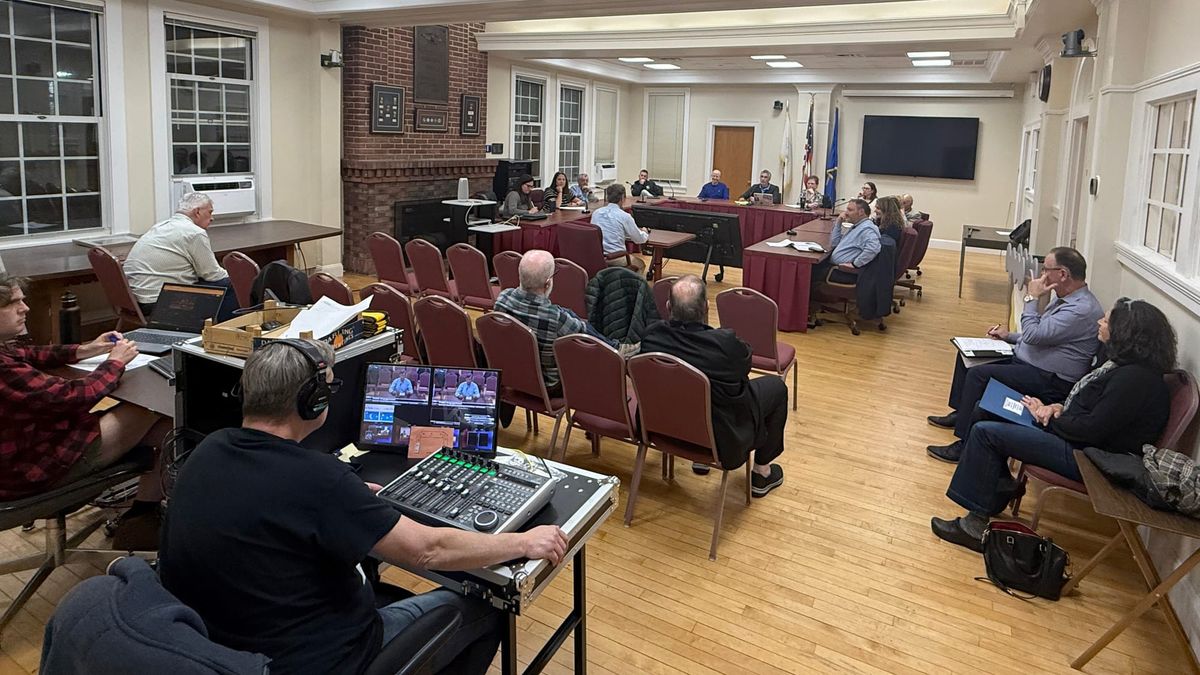
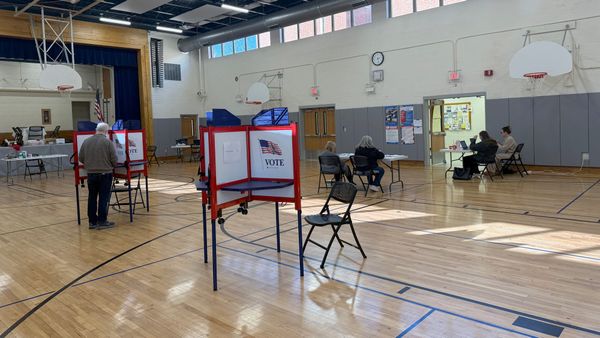
The Beecher Road School Building Committee met October 20 to consider its next steps after Woodbridge voters rejected the proposed $118.5 million school replacement project by 1,847 votes to 919 in the October 13 referendum (see agenda).
Committee members initially focused their discussion on revisiting the rejected proposal, although some members also advocated reassessing the school's facilities needs and evaluating potentially less expensive alternatives. Members discussed reducing the size of the proposed new school, seeking additional proposals from existing consultants and conducting another round of public outreach.
The discussion came one day after the Woodbridge Board of Education began reconsidering the school's facilities needs, including deferred maintenance, educational requirements and opportunities to make better use of existing space. (See WTC article 10/26/2026 for details.)
The two discussions raise important questions about how the next phase of planning will proceed, including which board or committee will direct consultant work, how earlier public feedback will inform a successor project and what additional planning will cost.
Chairman Martin Halprin said the committee had already taken steps toward obtaining additional consultant services. “We’ve already reached out to Antinozzi and Associates,” he said, adding that the committee was awaiting “a proposal for our next steps.” Once received, he said, members “could go to the Board of Selectmen for a funding request.” He mentioned revisiting educational specifications and potentially reducing the size of the proposed building.
Later, members discussed whether to also seek a proposal from Construction Solutions Group (CSG) for potential future grant-application work.
No new consultant contracts or expenditures were authorized at the meeting. The committee did not establish a detailed scope for the proposed additional work or clarify how the Antinozzi proposal would be reviewed before a funding request was submitted to the Board of Selectmen.
Who has authority to develop the next project?
The committee’s April 8, 2026 charge, approved by the Board of Selectmen, describes an advisory body tasked with advancing the project developed through earlier work by the Woodbridge Board of Education and the Beecher Infrastructure Upgrade Building Committee. It directs members to recommend design professionals, prepare plans based on the 2025 educational specifications, review designs, seek bids following board approvals and oversee construction.
The charge does not specifically address what should happen if voters reject the proposed project, including whether the committee may develop a substantially different successor proposal without further direction from the Board of Selectmen.
Committee members discussed expanding membership to include additional representatives from the Board of Selectmen and Board of Finance, as well as potentially adding other voting members. Participants also suggested revisiting the committee's charge, although the discussion focused on expanding its membership rather than proposing specific changes to its responsibilities or authority.
The committee did not resolve how responsibility for developing a successor proposal would be divided among the Board of Education, Board of Selectmen and Building Committee, or whether its existing charge would need to be revised for this purpose. The meeting also left unresolved how additional consultant work would be authorized and funded, including which board would approve the expenditures and which budget would bear the costs.
At the October 20 meeting, committee members referred to a conversation with a representative of the Sherman Board of Education about that town's experience following a defeated school referendum. During public comment, the writer of this article asked which Woodbridge officials had participated and encouraged the committee to share information from the exchange publicly so residents could benefit from Sherman's experience (see editor's note, below).
Educators describe unexpected opposition from school families, cheers from students
Two Beecher educators who serve on the building committee described reactions to the referendum that surprised them, including opposition from parents with children currently attending the school.
Teacher and town resident Lanna Moore said she had been struck by the number of Beecher families who told her they opposed the project. She recalled that some parents told her they simply could not afford higher taxes. “I was surprised by the number of families who have kids at Beecher who came up and were flat-out absolutely no,” she said. She acknowledged that she had not recognized the extent of that opposition until late in the process.
Teresa Ramia, another Beecher teacher who serves as a non-voting member as a representative of the Woodbridge Education Association, described students' reactions when they learned the referendum had failed. “When I told them that it didn't pass, they actually cheered,” she said.
Ramia suggested that the reaction reflected children's affection for their existing school, noting that staff work hard to shield students from the building's deficiencies.
The earlier survey already identified the concerns
Committee members discussed conducting another survey, focus groups or other outreach to understand why voters rejected the proposal. The town had previously retained Tall Timbers at public expense to conduct community outreach, including a survey whose results were presented June 16. Among 250 responses, 72.7% identified project costs and taxes among their top concerns.
Previous reporting in the Woodbridge Town Chronicle based on records obtained through Freedom of Information requests included the full written comments. They repeatedly raised affordability, debt, transparency and questions about whether renovation alternatives had received adequate consideration. The survey asked primarily about residents’ concerns and information needs, not whether they supported or opposed the proposed project. The available records did not establish that it was a representative scientific poll.
During the October 20 discussion, Woodbridge Board of Education Chairman Steven Lawrence acknowledged that the earlier survey’s open-ended responses had been overwhelmingly negative and, in hindsight, prescient. The committee discussed conducting additional outreach, but did not establish how the findings from the earlier survey would inform its next steps.
In an October 19 letter to the editor, William Silberberg and Matthew Giglietti, identified as officers of the Vote No committee, urged town leaders not to simply repackage the rejected proposal at a lower price. “Public engagement must be meaningful, not simply an effort to persuade voters to accept decisions already made,” they wrote.
Public comments focus on affordability, existing facilities and the scope of a new project
During public comment, residents offered suggestions for the committee's next steps, including reconsidering renovation and addition options, addressing immediate maintenance needs, keeping costs affordable and involving a broader range of residents in developing a successor proposal.
Resident Bob Hill urged the committee to consider renovation and addition alternatives rather than proceeding on the assumption that the existing school must be demolished. He emphasized affordability and encouraged the committee to involve residents who opposed the referendum proposal.
Matthew Giglietti raised questions about the potential impact of new housing development on school enrollment. Drawing on his son's experience involved in verifying student residency as a public school administrator in another district, Giglietti cautioned against relying on assumptions about how many schoolchildren may live in apartments and other multifamily housing.
The writer of this article, speaking during public comment, encouraged the committee to prioritize repairs to the existing school while longer-term planning continues, citing experience with the phased 2013–2016 Beecher renovation, which was completed without requiring portable classrooms. That approach avoided the additional costs, security concerns and potential disruption to teaching and learning associated with temporary facilities. Another suggestion was to investigate whether state reimbursement associated with the 2024 Beecher roof project could help fund needed improvements.
The roof project appears on the state's December 13, 2024 School Building Project Priority List (see page 12), with an estimated state grant of $459,045 toward the $1,428,268 project cost. Inclusion on this list does not guarantee payment. Reimbursement remains subject to applicable state requirements, including submission and approval of required documentation. The final reimbursement amount and whether any funds have been received have not yet been confirmed.
Cathy Wick, a former member of the WBOE Facilities Committee, questioned whether routine repairs should originate with that committee rather than the Building Committee. She also asked about plans to expand prekindergarten, recommending that the district assess demand for additional programming beyond what is legally required before proceeding. Wick urged closer coordination with the Board of Finance and suggested establishing an affordable project budget before developing another proposal.
Architect David Barkin, a former WBOE vice-chairman who served as chair of the Facilities Committee, said he had expected more discussion about reconsidering the project's scope rather than improving communications about the rejected proposal. He asserted that the objective should not simply be to shrink the proposed new building, but to lessen the need to construct new space by retaining and improving functional portions of the existing school. He suggested that phased construction could allow improvements and additions without necessarily requiring temporary classrooms.
He also cautioned that the questions posed to consultants could determine which alternatives receive serious consideration. Barkin urged careful attention to any revised committee charge and to the scope of additional work assigned to Antinozzi. He supported retaining the architectural firm because of its familiarity with the school, but questioned whether Construction Solutions Group needed to be engaged before a new project was defined.
Responding to Barkin, Halprin said the committee intended to revisit all options, including the Better Value Plan Barkin had previously proposed, but that the committee would need additional funding before proceeding with that work.
Barkin also suggested establishing a capital spending limit for the next proposal. Although state reimbursement could offset some construction costs, he argued, reducing the amount of new construction would reduce the town's financial burden.
The discussion then turned to obtaining guidance from the Connecticut Department of Administrative Services (DAS). Board of Selectmen liaison Maria Madonick suggested inviting a DAS representative to explain school construction grants, reimbursement priorities and state standards. Barkin, who works in the state's school construction plan review program, responded by distinguishing his professional responsibilities from his participation as a Woodbridge resident. He explained that DAS separates grant administration from plan review and that his responsibilities generally begin when projects are ready for bidding. He advised the committee to seek reimbursement guidance directly from the state's grants office.
For background context, the state's school construction program underwent organizational changes following the 2021 departure of former director Konstantinos Diamantis amid an investigation into the program. The Connecticut Mirror reported that DAS subsequently separated school construction auditing from grants and plan review to strengthen independent oversight.
In concluding his remarks, Barkin emphasized that he was participating in the meeting as a resident and taxpayer, not as a state official. He also disclosed that someone had contacted his commissioner to question his previous public comments about Beecher. Barkin discussed recusing himself from official state actions involving any future Beecher or Amity project submitted to DAS, and explained that he could appropriately continue participating in public discussions of the Beecher project as a resident. He also expressed willingness to serve in an official local capacity if asked.
Committee looks to Selectmen for next steps
In closing the meeting, Halprin thanked those who attended and noted that the committee's next scheduled meeting would be November 17 at 7 p.m., one week after the November 10 Board of Selectmen meeting.
The committee agreed by consensus to seek changes to its membership without convening another meeting beforehand. Members did not formally vote on a recommendation or designate who would present the request to the selectmen. It remains unclear how the committee's recommendation will be conveyed to the board.
Click below to watch WGATV's full recording of the October 20, 2026 Special Meeting of the BRSBC.
Editor's note: Woodbridge Town Chronicle editor Sheila McCreven previously chaired the Woodbridge Board of Education and the Beecher Capital Projects Building Committee (2022–2023), and served on the building committee responsible for the 2016 Beecher renovation. She attended the October 20 meeting both to report on its proceedings and to offer public comment as a resident, drawing on her experience with earlier school projects.