Board Watch: Amity eyes $35M referendum, WBOE revisits Beecher priorities, Housing Commission seeks larger role
Proposed school improvements, student services, and housing development highlight three meetings all held on October 19

Board Watch is a recurring feature designed to provide a concise walk-through of activity as we keep track of the week's civic work. Longer-form articles will appear when issues warrant deeper coverage.
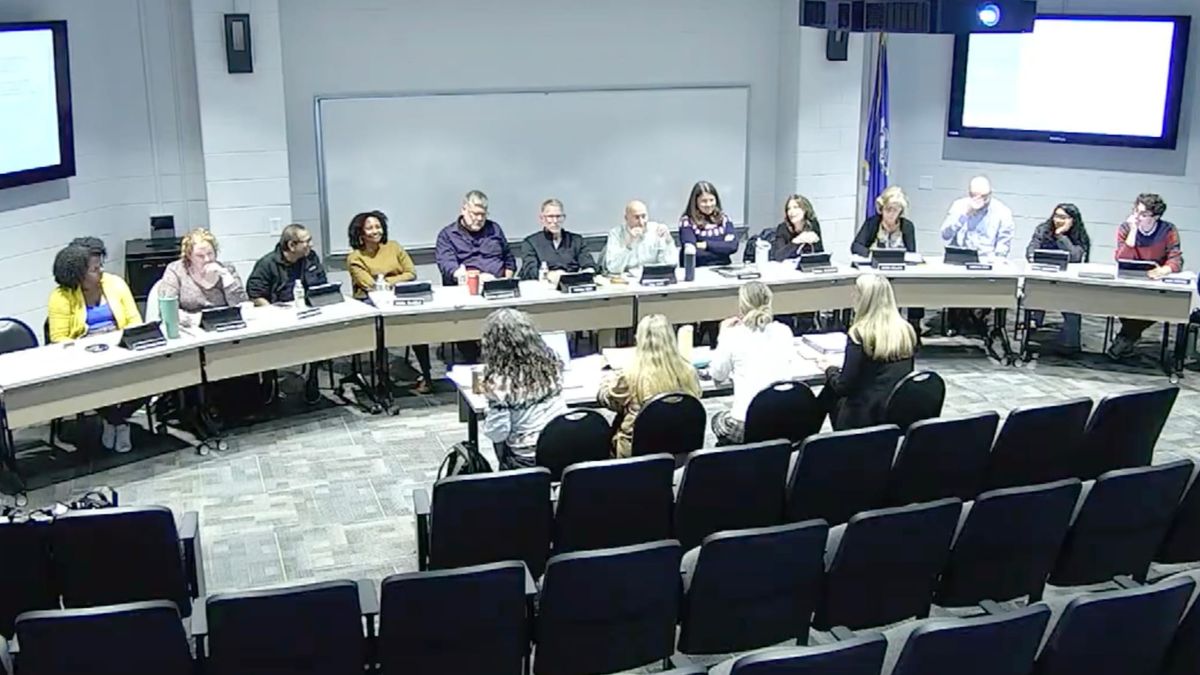
Three boards serving Woodbridge residents met simultaneously on Monday evening, October 19, addressing issues with potentially significant consequences for Town finances, public education, and housing development.
The Amity Regional Board of Education considered a major capital improvement program and how its costs might be presented to voters. The Woodbridge Board of Education discussed a free breakfast program, enrollment, and school finances. It also discussed deferred maintenance, near-term capital needs, and the importance of reassessing the school's facilities requirements before determining a longer-term course in the aftermath of the Oct. 13 referendum results. Meanwhile, the Housing Commission discussed its role in planning for redevelopment of the former Woodbridge Country Club property among other topics.
Because the meetings overlapped, residents interested in following all three could not attend or watch each proceeding live. This week's Board Watch brings together highlights from their discussions and decisions.
Amity Regional Board of Education — October 19, 2026
The Amity Regional Board of Education advanced planning for approximately $35 million in proposed capital improvements at its schools in Woodbridge, Bethany, and Orange, including HVAC systems, middle school roofs, library media centers, and artificial turf athletic fields (see agenda).
Capital projects and referendum questions
The projects under consideration include approximately $6.6 million in roof retrofits at the Bethany and Orange middle schools, $3.25 million in library media center renovations, and $7.6 million for what the district describes as “all-weather” athletic fields at those schools. That terminology is familiar from an earlier Amity capital referendum that included an artificial turf field at the high school. The current proposal would extend artificial turf playing surfaces to both middle schools. Heating, ventilation, and air conditioning (HVAC) improvements account for much of the remaining proposed spending.
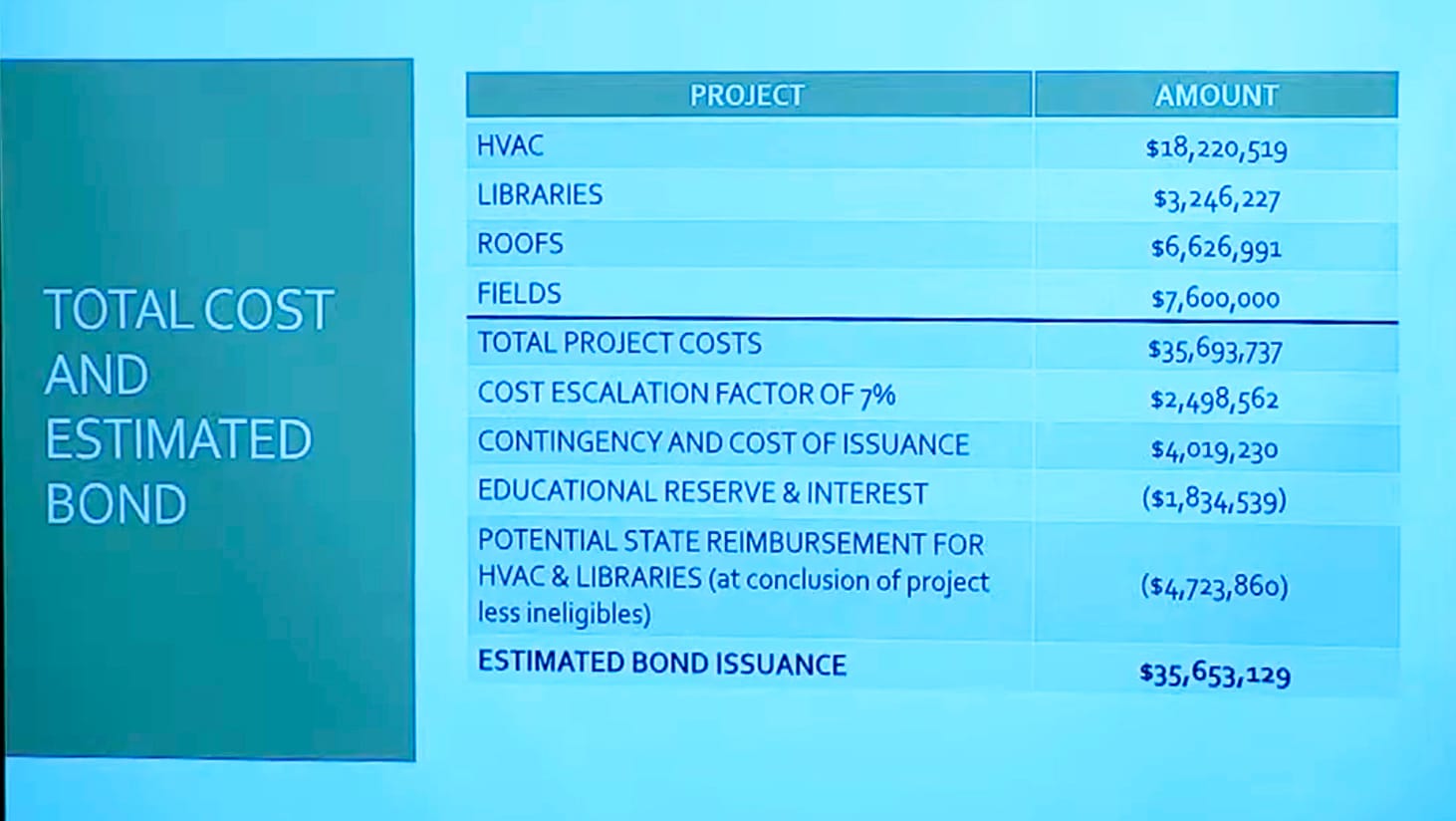
The Facilities Committee recommended roof retrofits rather than complete replacements based on projected costs over their useful lives. One important consideration is that the proposed retrofits would not qualify for state school construction reimbursement, while qualifying full replacements potentially could.
Board members also discussed how the projects should be presented to voters. Bond counsel suggested two referendum questions, separating building improvements from athletic fields. An Amity board member representing Woodbridge, Donna Schuster, advocated that four separate questions be listed on the ballot, expressing concern that combining projects could jeopardize approval of necessary building repairs.
The discussion followed the October 13 defeat of Woodbridge's proposed $118.5 million Beecher Road School proposal, which voters rejected by more than two to one.
The Amity board approved four motions allowing the administration to continue planning the projects. Those votes did not authorize construction or borrowing, and no final ballot structure was established. The district intends to bring the proposed bonding to voters on May 4, 2027, in conjunction with its annual budget referendum. Final project costs, borrowing authorizations, and the number and wording of referendum questions remain subject to further board consideration and approval.
Woodbridge's share of the costs
Amity's capital expenses are shared among Bethany, Orange, and Woodbridge according to enrollment-based assessments. Woodbridge currently funds approximately 32 percent of the district's costs.
Woodbridge Finance Director Tony Genovese has projected that the Town's share of the contemplated Amity capital program could total approximately $16 million, including financing costs. The actual amount will depend on the projects ultimately approved, borrowing terms, and applicable cost-sharing arrangements.
Unlike the proposed Beecher project, which would have involved borrowing directly by the Town, Amity capital borrowing would be undertaken by the regional district, with the resulting debt payments included in each member town's combined annual assessment for operating, capital, and debt service expenses.
Student wellness survey
The board also reviewed findings from a student wellness survey involving students in grades seven, nine, and eleven. The discussion addressed difficulties with concentration, awareness of substance-use assistance, and concerns involving online behavior and student well-being.
One particularly concerning finding was that only 23% to 27% of students reported knowing where to turn for help with preventing or addressing substance use problems. Presenters emphasized the need to make support services more visible and accessible, while recognizing that students may hesitate to seek help because of concerns about confidentiality or stigma.
Click below to watch the full recording of the October 19, 2026 Amity Regional Board of Education meeting.
Woodbridge Board of Education — October 19, 2026
The Woodbridge Board of Education discussed a proposed free breakfast program at Beecher Road School, reviewed enrollment and financial projections, and considered next steps following the defeat of the school reconstruction referendum (see agenda).
Free breakfast program under consideration
Superintendent Christopher Montini and Food Service Director Jessica Hill outlined plans for a pilot program offering free breakfast to all Beecher students.
The program could begin November 2, or December 1 if additional preparation is needed, with breakfast available from approximately 8:20 to 8:40 a.m. Administrators would monitor student participation, staffing costs, and any effects on instructional time.
Open Choice enrollment and school finances
The board reviewed participation in Connecticut's Open Choice program, through which students from other districts attend Beecher Road School. Beecher currently enrolls 18 Open Choice students. Montini recommended maintaining 18 seats for the 2027–28 school year, with a board vote anticipated November 16.
A financial report projected a year-end operating deficit of approximately $99,600 against the district's $19.06 million adopted budget. The largest pressure comes from special education, with projected costs exceeding the budget by approximately $124,600, primarily because of out-of-district tuition. Savings in other accounts, including salaries and benefits, partially offset those expenses.
The district also reported an unanticipated $55,000 chiller repair and additional costs for temporary agency personnel filling non-certified positions. Together, these contributed to a projected $88,673 overrun in purchased property services, although the district's regular repairs and maintenance budget was not projected to exceed its appropriation.
The projections are based on financial results through September 30, just three months into the fiscal year. The district will continue monitoring expenditures and updating its year-end projections as the year progresses.
Academic performance and Beecher's future
Board members reviewed student achievement and academic growth results, including questions about how effectively the district is supporting students who have not yet met proficiency standards.
The board also began considering how to proceed following the October 13 referendum defeat. The discussion distinguished between immediate physical maintenance and infrastructure needs and opportunities to use existing space differently to meet educational requirements. Specific maintenance priorities mentioned included thermostats, an elevator and the next portion of roof needing replacement. Members also discussed classroom space limitations, including the need for smaller spaces to accommodate special education services.
As an immediate next step, members suggested that the WBOE Facilities Committee work with district administrators to compile a consolidated list of building needs, identify urgent repairs and help establish priorities. That information would inform a proposed special Board of Education meeting to review the school's condition, revisit educational specifications, consider a facilities tour and explore both short-term improvements and more effective use of existing space. The goal would be to identify measures that could be incorporated into the 2027–28 operating and capital budgets while a longer-term solution is reconsidered.
WBOE Chairman Steven Lawrence said he would work with board members and administrators to schedule the special meeting within the next several weeks. No date was established during the discussion, and no specific capital projects or expenditures were approved.
Click below to watch the full recording of the October 19, 2026 Woodbridge Board of Education meeting.
Woodbridge Housing Commission — October 19, 2026
The Housing Commission discussed the Town's solicitation of redevelopment proposals for the former Woodbridge Country Club, opportunities for mixed-use housing, and plans to gather additional public input on housing needs (see agenda).
Commission seeks involvement in Country Club redevelopment
Commission members expressed concern that they had not been sufficiently involved in preparing the Town's Request For Expressions of Interest from potential partners or developers (see the RFEI as posted at the Town website) for the former Country Club property.
Members questioned how the solicitation was developed, how much flexibility developers would have in proposing alternatives, and what role the Housing Commission would play in reviewing responses.
The discussion included the Town's preferred master plan, which envisions senior cottages, townhouses, assisted living accommodations, and an inn. Some members questioned whether the approach sufficiently considers housing for younger residents, working households, and people with different income levels.
Chairman Dominick Thomas agreed to communicate the commission's desire for greater involvement and seek additional information about the process. The commission did not vote to reject or amend the solicitation.
Housing and economic development opportunities
Economic Development Commission Chairman Clifford Lynch joined the discussion of potential residential and commercial development, particularly opportunities for mixed-use projects along Amity Road.
Commissioners also discussed a request from First Selectman Mica Cardozo to explore potential participation in the Connecticut Municipal Development Authority (CMDA), a state quasi-public agency that supports housing and economic development, particularly in walkable downtowns and transit-oriented neighborhoods. Participation could provide the Town with additional resources and assistance for future housing and economic development projects (see WTC article 10/12/2026). The discussion was exploratory, and the commission took no formal action on joining the authority.
A joint presentation involving the Housing and Economic Development commissions was suggested by the members to help them better understand the authority's programs and potential role. No decision to join the authority has been made.
Housing survey and public information
The commission voted without opposition to authorize members to proceed with placing a housing survey on the Town website. The survey is intended to help identify residents' interests and inform future public discussions about housing opportunities and state requirements.
Members also discussed possible public information sessions and a home-sharing concept that could match homeowners with available space and people seeking housing. Neither a home-sharing program nor a public session date was finalized.
Measuring the school enrollment impact of new housing
Thomas also raised the question of how many public school students actually live in apartment developments, describing research he conducted involving residential properties in Shelton.
He said he examined property assessments and potential tax revenues and obtained student counts associated with individual addresses from the Shelton school district. He said such information could help communities compare the tax revenues generated by new housing with the educational costs associated with additional students.
Woodbridge may already possess information useful for a similar analysis. The Town Clerk, who also serves as the Town's Census Taker, maintains residential census records that typically include individual addresses, apartment identifiers, and the ages of household members. Enrollment information from the Woodbridge School District (pre-K through grade six) and Amity Regional School District No. 5 (grades seven through twelve) could provide additional information.
An analysis of those records could establish how many school-age children lived in different types of housing. If annual records are available for analysis, the Town could potentially examine how those numbers have changed over the past decade, including the distribution of school-age children among apartments and other multifamily properties. Combined with actual public school enrollment and property assessment data, such an analysis could provide a more reliable basis for evaluating the financial effects of proposed housing developments.
Click below to watch the full recording of the October 19, 2026 Woodbridge Housing Commission meeting.