Board Watch: TPZ preserves open space, Charter Commission backs budget referendum, EDC explores state development partnership
A 36-acre subdivision on Blue Trail Drive, a proposal for direct voting on the Town budget, and the First Selectman's recommendation to explore working with the state on housing and economic development highlight recent meetings

Board Watch is a recurring feature designed to provide a concise walk-through of activity as we keep track of the week's civic work. Longer-form articles will appear when issues warrant deeper coverage.
Who decides how Woodbridge grows, how its annual budget is approved, and what land should be preserved? Those questions took different forms at three recent Town commission meetings, as officials considered the future of a large undeveloped property, a potential change in how residents vote on the Town budget, and new opportunities to work with the state on housing and economic development.
Town Plan and Zoning — October 5, 2026
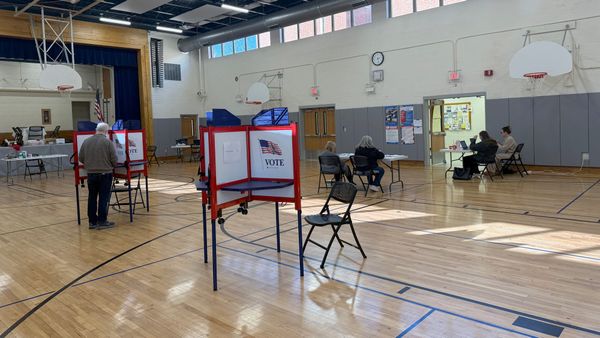
The Town Plan and Zoning Commission approved a three-lot residential subdivision at 20 Blue Trail Drive that will also preserve approximately 16 acres of open space, while continuing its work on housing regulations and state housing requirements among other items on the agenda of at its regular October meeting (see agenda).
Blue Trail subdivision preserves open space
The Commission approved an application to divide approximately 36 acres at 20 Blue Trail Drive into three residential lots, with about 16 acres to be conveyed to the Woodbridge Land Trust for permanent preservation. The Conservation Commission unanimously supported the proposal.
The property has long appeared in the Town's Open Space Plan, maintained by the Conservation Commission, among parcels identified as worthy of preservation. The 2020 plan highlights its wooded ravines, steep slopes facing West Rock Ridge, quartz schist formations studied by geology classes, and an historic trail described as a critical link in the Woodbridge Greenway. It also emphasizes the property's importance as year-round wildlife habitat, its proximity to Boy Scout Camp Whiting, and its status as one of the Town's last remaining large undeveloped tracts.
The agreement will help keep a substantial stretch of woodland intact. In Woodbridge, where opportunities to conserve large, connected natural areas are increasingly limited, the agreement represents a lasting conservation benefit alongside the development of three new residential homesites.
Housing Growth Plan questions remain
Commissioners briefly revisited Connecticut's new Housing Growth Plan requirements, largely reiterating concerns raised at previous meetings. With additional state guidance still pending, questions persist about how regional housing growth targets will be established, how much flexibility municipalities will have to propose alternatives, and the deadlines for responding to those targets.
The Commission also reiterated that the Housing Growth Plan is a planning requirement, not a mandate for the Town to construct a specified number of housing units. The South Central Regional Council of Governments (SCRCOG) is expected to assist municipalities with public education about the new requirements and public information sessions are anticipated, but no dates have been announced.
Upcoming zoning hearings and business approval
Two proposed zoning amendments are scheduled for public hearings November 2. One would establish provisions for shared community residential housing, including recovery, transitional, veteran and supportive housing. The other addresses family and group childcare homes.
The Commission also approved a special exception permit for Top Rank Automotive to operate a vehicle service and repair business, including towing-related activities, at 75 Bradley Road.
Luciani Street enforcement concerns continue
The Commission revisited longstanding zoning enforcement concerns at 110 and 114 Luciani Street, where neighbors have questioned excavation activity and unfinished site work.
Staff reported that an enforcement letter was issued after neighbors submitted photographs of apparent excavation activity at 114 Luciani Street in August, despite the property's excavation permit having expired in May. A subsequent inspection found no evidence of additional excavation. Excavation permits for both properties have now expired, although construction of a two-family residence at 110 Luciani Street continues under a valid building permit.
A local nonprofit organization, Woodbridge Neighbors Inc., has asked the Town to consider calling the bond associated with unfinished work at 114 Luciani Street. The request was referred to the Town Attorney for review. Although staff reported that the site is stable, with no current erosion observed, questions remain about when the unfinished work will be completed and what enforcement steps the Town may take.
Click below to watch the full recording of the October 5, 2026 TPZ meeting.
Charter Revision Commission — October 7, 2026
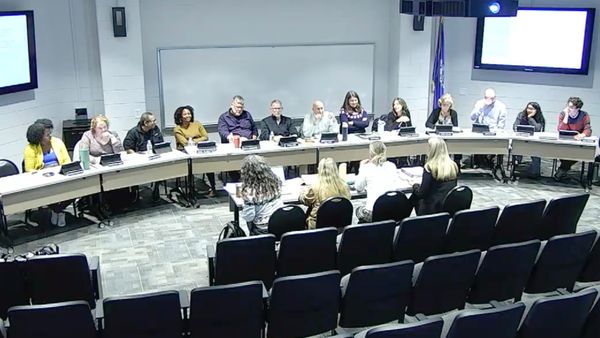
The Charter Revision Commission reversed the voting alignment seen at its September meeting as members considered a proposal to move approval of the annual Town budget from the Annual Town Meeting to a townwide referendum (see agenda).
A motion to retain the existing budget approval process failed 4–3, with Commissioner Melissa Durso providing the deciding fourth vote. At the Commission's September 2 meeting, Durso had voted with the four-member majority to retain two other Charter provisions. This time, her vote aligned with the three commissioners who had been in the minority on those earlier questions (see WTC article 09/07/2026).
Balancing participation and public discussion of the annual budget
Much of the October 7 discussion centered on whether a referendum would make budget voting more accessible while preserving opportunities for residents to question officials, discuss spending priorities and propose changes.
Commissioners also reviewed statewide data on how Connecticut municipalities approve their annual budgets. Commissioner Jeffrey Ginsburg cited a report by the Connecticut Advisory Commission on Intergovernmental Relations (ACIR) showing that, in 2018, 69 municipalities approved budgets by referendum, compared with 48 using town meetings. Ginsburg pointed to a longer-term shift toward referendums, although another commissioner noted that the more recent figures showed a slight decline in referendum use between 2015 and 2018. The discussion underscored the different approaches Connecticut towns take to budget approval and the question of whether Woodbridge should retain its traditional town meeting process or provide a broader opportunity for residents to vote at the polls. The ACIR survey series ended in 2019, so the figures do not reflect current practices.
Durso acknowledged the value of town meetings but also described practical limitations that prevent some residents from attending lengthy evening sessions. She expressed interest in a hybrid approach that would allow residents to learn about and discuss the budget before voting at a referendum. "I'm on the fence. I have not committed yet," Durso said during the discussion. She also raised questions about the additional cost of conducting referendums and what would happen if voters rejected a proposed budget. Her eventual vote against retaining the existing process was followed by a second motion that addressed some of those concerns.
Commission backs town meeting discussion followed by referendum vote
The Commission voted 6–1 to support a proposal that would preserve the Annual Town Meeting while removing budget approval from its call. Under the proposed arrangement, residents would still have an opportunity to discuss the budget at the meeting, but the final approval would occur through a separate townwide referendum using voting machines.
The arrangement is a well-established practice in Connecticut municipal government. Neighboring Orange, for example, routinely holds an annual town meeting for consideration of its budget, followed by a townwide referendum for final approval — a process established in Section 2.6 of its Town Charter.
Chair Susan Jacobs cast the sole opposing vote. She specifically requested that the minutes reflect her reason for opposing the motion: consistency with her position against moving budget approval to a referendum.
The Commission also discussed an unresolved procedural question: what should happen if voters reject a proposed budget at referendum? Members agreed to return to that issue rather than attempt to resolve it during the meeting and asked the Town Attorney to research options.
Next steps in the Charter revision process
The Commission's next scheduled meeting is November 4, when members will consider provisions governing referendums involving Town property, residents' petitions for Special Town Meetings, spending and contract approval thresholds, and agricultural leases. Commissioners also expect to revisit the question of how to proceed following a failed budget referendum.
In December, commissioners are scheduled to examine whether the Board of Finance and Town Plan and Zoning Commission should become elected rather than appointed bodies, and whether members of the Town Plan and Zoning Commission should be prohibited from serving simultaneously on other Town boards and commissions.
Throughout the Charter revision process, votes taken at individual meetings establish the Commission's working positions on proposed changes, which will inform its final recommendations. The Commission must submit its draft report, including proposed Charter language, to the Board of Selectmen by January 29, 2027.
Following the required public hearing and review by the Board of Selectmen, any proposed Charter revisions submitted to referendum must be approved by Woodbridge voters before taking effect. The Town is working toward a November 2, 2027 referendum on proposed Charter revisions, to coincide with the municipal election.
Click below to watch the full recording of the October 7, 2026 Charter Revision Commission meeting.
Economic Development Commission — October 8, 2026
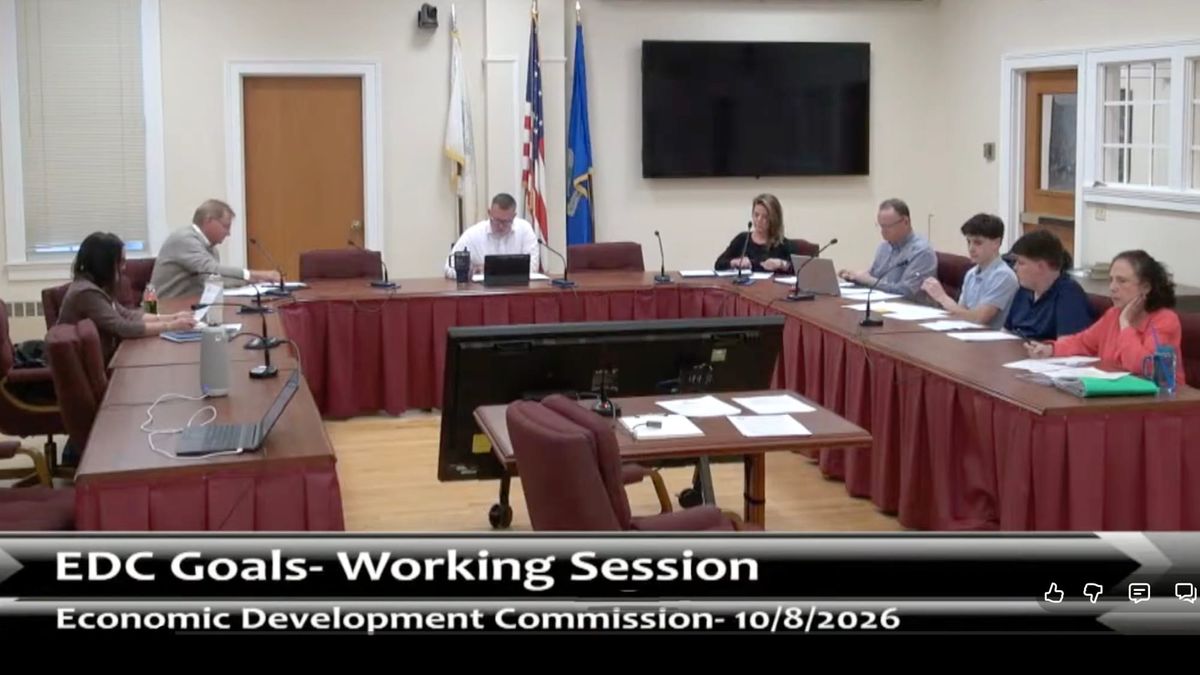
The Economic Development Commission discussed whether Woodbridge should explore participation in a state housing development program and revisited questions about the Town's approach to attracting businesses and encouraging commercial investment (see agenda).
State development authority under consideration
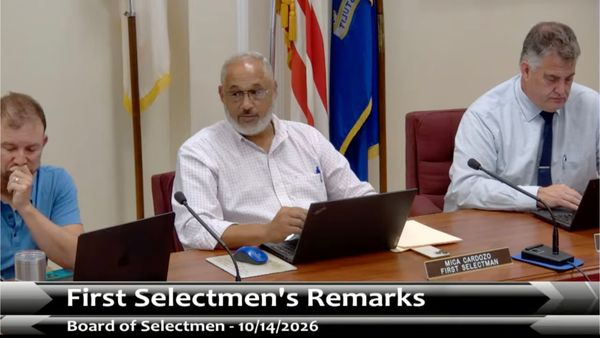
Commissioners discussed a request from First Selectman Mica Cardozo to explore potential participation in the Connecticut Municipal Development Authority (CMDA), a state quasi-public organization focused on expanding housing development, particularly in walkable downtowns and transit-oriented neighborhoods, as part of broader community revitalization efforts.
Cardozo has asked the Economic Development Commission and Housing Commission to examine the possibility of Woodbridge joining CMDA. Commissioner Scott Hunter noted that participation would require a formal resolution and an opportunity for public comment before a vote. Under Connecticut General Statutes §8-169ll, the resolution would be adopted by the Board of Selectmen.
EDC members suggested that the Town Plan and Zoning Commission should also participate in further discussions, given the potential implications for local land-use regulations and approval procedures.
Economic development incentives or a broader vision?
Commissioners also revisited an ongoing discussion about how Woodbridge can better attract and retain businesses.
Some members favored moving forward with economic development incentives, noting that recommendations developed by the Commission in previous years had not been adopted by the Selectmen. Others emphasized the importance of first establishing a broader vision for the Town's commercial areas, including the types of businesses and development Woodbridge hopes to encourage.
The discussion highlighted differing views about whether specific incentives should be pursued now or developed as part of a longer-term economic development strategy.
Commissioners also discussed business outreach and marketing efforts, along with the status of a proposed connectivity improvement project awaiting additional information from the Connecticut Department of Transportation.
Upcoming business opening
The Commission announced a ribbon-cutting ceremony for Lucky Soul Tattoo at 88 Bradley Road, scheduled for November 2 at 4 p.m.
The EDC's next regular meeting is scheduled for November 12.
Click below to watch the full recording of the October 8, 2026 EDC meeting.