Charter Revision Commission maps out review of 14 recommendations, sets agenda through January
Commission organizes proposals into major policy areas as members seek clarity on intent and process for potential charter changes

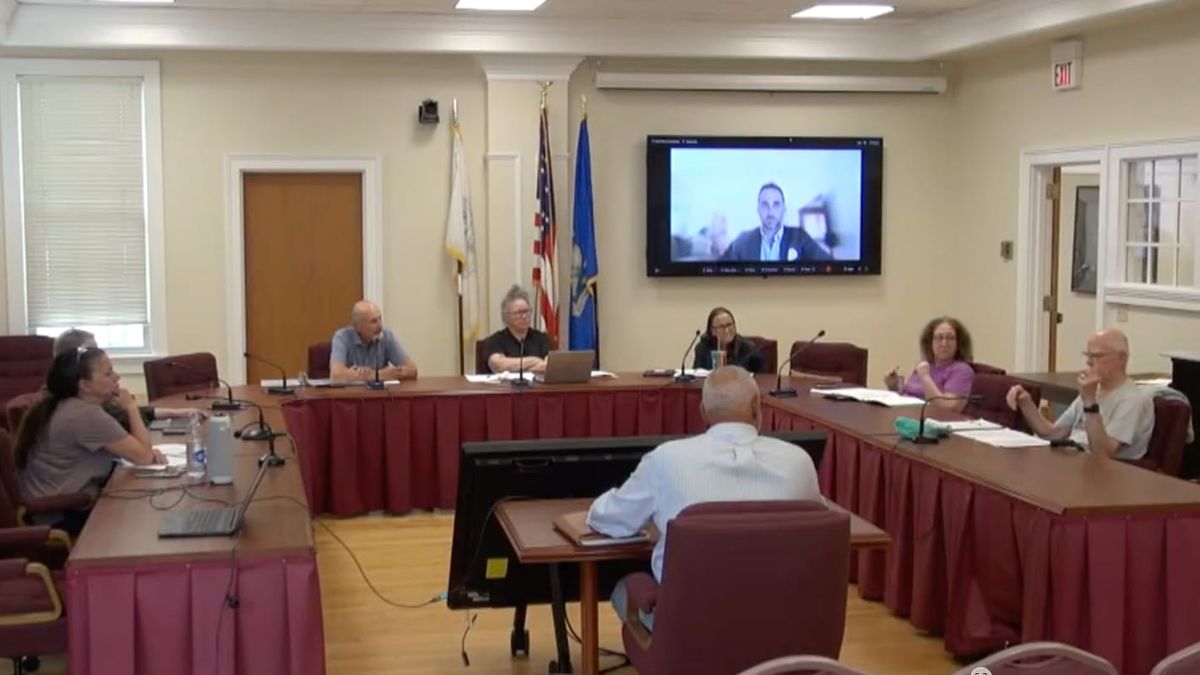
The Woodbridge Charter Revision Commission has adopted a roadmap for reviewing 14 charter revision recommendations over the next seven months, organizing the proposals into six broad policy areas ranging from Board of Selectmen governance and budget voting procedures to elected boards, property referendums, and term lengths for elected officials. During its July 1 meeting, commissioners also sought clarification from First Selectman Mica Cardozo and Town Attorney Nick Bamonte regarding the intent behind several recommendations before beginning substantive discussion later this fall (see agenda).
The recommendations originated as part of the charter revision initiation process begun at the Selectmen’s first meeting after the town elections (see WTC article January 11, 2026). The recommendations, discussed at the February BOS meeting, identify a series of possible charter changes for the commission's consideration, including proposals affecting elections, budgeting, town property transactions, board structure, qualifications for office, and other governance issues (see WTC article February 16, 2026).
Among the recommendations are proposals to eliminate the First Selectman's tie-breaking second vote on the Board of Selectmen, require machine voting on the annual town budget, consider making the Board of Finance and Town Plan and Zoning Commission elected bodies, increase elected terms of the First Selectman and Board of Selectmen from two to four years, and update provisions governing town property transactions and Special Town Meetings.
Questions and clarifications
Cardozo attended the meeting and answered questions from commissioners about several of the proposed charter revisions. Much of the discussion focused on understanding the intent and scope of the proposals before substantive review begins.
One discussion centered on a proposal involving contract approvals and spending thresholds. Cardozo clarified that one reference raised by commissioners related to an ordinance rather than the charter itself. Commissioners also sought clarification regarding a proposal calling for a review of qualifications for town officers and members of boards and commissions. Cardozo said the recommendation was intended broadly and was not meant to require that all members of a particular board possess identical professional credentials or backgrounds.
Another discussion focused on unexplained annotations appearing in the online version of the town charter, including references such as “Editor's Note” and “Amendment Pending.” Commissioners said they wanted to ensure they were working from an accurate and current version of the charter before proposing revisions. Neither Cardozo nor Bamonte was able to explain the origin of the annotations. Bamonte suggested the commission may wish to consult historical records or the Town Clerk's office to determine whether the references relate to prior charter revision efforts or earlier publishing practices.
Commission review of recommendations
While commissioners had been working from the recommendations document for several months, the document itself does not appear to have been posted on the town website or included in July 1 or previous meeting materials. The Woodbridge Town Chronicle obtained a copy of the document following the meeting and has made it available to readers wishing to review the proposals under consideration by the commission (see Charter Revision Commission Recommendations).
Discussion by commissioners at the July 1 meeting focused largely on clarifying the intent and scope of individual recommendations before more substantive policy deliberations begin. Cardozo emphasized that the recommendations should not be viewed as a consensus position of the Board of Selectmen. Rather, he said, they represent ideas submitted by individual selectmen for the commission's consideration.
The discussion highlighted an unusual aspect of the process: commissioners were working from a document containing fourteen proposed charter revisions, yet several members indicated they were still seeking to understand the purpose, rationale, and origin of some of the recommendations before evaluating their merits. Questions during the meeting focused on what specific issue a proposal was intended to address, who had raised the concern, and whether it reflected a broader policy objective or the views of individual officials. Although the meeting did not include discussion of how the recommendations were developed before being transmitted to the commission, the recommendations document itself includes the notation “approved by the Board of Selectmen on January 14, 2026.” Meeting minutes from that date show the Board unanimously voted to combine and transmit the recommendations to the Charter Revision Commission (see WTC article First regular meeting of new BOS ends with party-line vote on charter revision).
Establishing a review schedule
Following the clarification discussion, the commission discussed and adopted a tentative schedule of agenda topics for meetings extending through January 2027. Rather than reviewing the recommendations strictly in numerical order, commissioners grouped them into broader policy areas. The schedule is intended to help residents identify when topics of interest are expected to be discussed and to provide opportunities for public comment throughout the review process.
- September 2: Board of Selectmen governance issues, including the proposal to eliminate the First Selectman's tie-breaking second vote (Recommendation 1) and the proposal to seat the losing First Selectman candidate on the Board of Selectmen (Recommendation 2).
- October 7: Budget voting procedures, including a proposal to require machine voting on the annual town budget (Recommendation 3).
- November 4: Property and referendum-related provisions, including referendums involving town property (Recommendation 4), Special Town Meeting petitions (Recommendation 5), contract approvals and spending thresholds (Recommendation 11), and farmland lease provisions (Recommendation 12).
- December 2: Board structure and governance, including whether the Board of Finance and Town Plan and Zoning Commission should become elected bodies (Recommendation 6) and whether Town Plan and Zoning members should be prohibited from serving simultaneously on other town commissions (Recommendation 7).
- January 6: Terms of office and qualifications for town officials, including proposals to standardize elected terms at four years (Recommendation 8), move the commencement date for elected and appointed terms (Recommendation 9), review qualifications and eligibility requirements for town officers (Recommendation 13), and update the charter to use gender-neutral terminology (Recommendation 14).
Several recommendations were identified as largely administrative or technical matters that may be addressed throughout the review process regardless of where they appear on the meeting schedule. These include updating the charter to reflect the shift of municipal elections from May to November (Recommendation 10), revising farmland lease provisions (Recommendation 12), and updating charter language to use gender-neutral terminology (Recommendation 14). Commissioners indicated these items may be incorporated as conforming amendments as the broader charter review progresses.
Reporting requirements and timeline clarified
During the upcoming meeting schedule discussion, commissioners also referenced a timeline that appeared to extend beyond January. At this point, Bamonte reminded members that the commission is responsible for preparing a report containing proposed charter language as part of its work. The discussion occurred against the backdrop of the commission's formal charge approved at the February 11, 2026 BOS meeting, which calls for a final report to be submitted to the Board of Selectmen in January. The recommendations document itself further states that the commission is “required to comment on each recommendation” when submitting its report, meaning all fourteen recommendations will ultimately require a formal response, whether the commission supports, rejects, or modifies them. The report, together with any additional recommendations the commission chooses to make, is due to the Board of Selectmen no later than January 29, 2027.
Commission members emphasized that the meeting schedule is intended as a planning tool rather than a rigid framework and may be adjusted as additional issues emerge. Commissioners also agreed to cancel their previously scheduled August meeting, meaning the commission's first substantive policy discussion is now expected to take place on September 2.
The Charter Revision Commission meetings are open to the public and usually streamed live on the Town’s YouTube channel, WGATV79. Click below to watch the full recording of the July 1, 2026 meeting.