Acorn Hill: A vision for restoration, recreation, and community — and a draft proposal for the future
A Community Voice guest opinion piece by Anoka Faruqee and David Driscoll
Part 1 — Acorn Hill: A Vision for Restoration, Recreation, and Community
There are multiple visions for Acorn Hill.
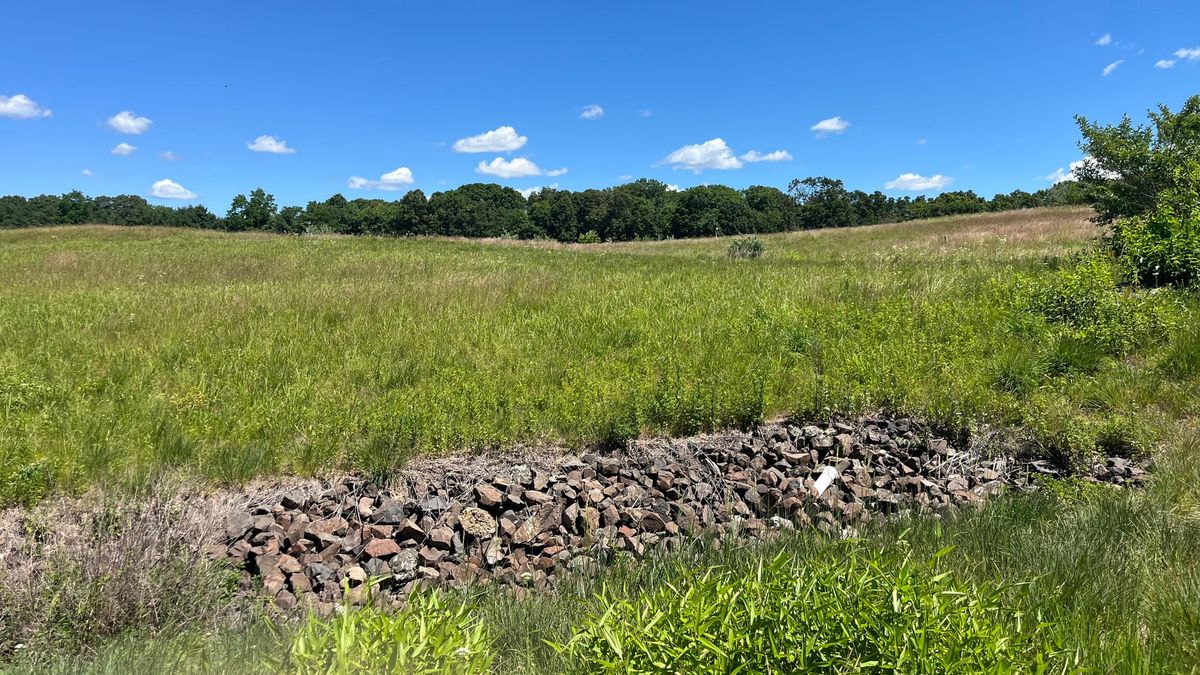
Residents have spoken of the magic of night baseball under lights. Organized sports builds resilience and lasting communities. Another resident remembers a different Acorn Hill. As a child, there were pools of water so still and clear that the boundary between air and water disappeared. Fish appeared suspended above the forest floor. Those pools are gone now, silted over by the landfill, tainted by leachates that continue to move through the surrounding watershed.
Can this natural jewel be redeemed? Can these visions coexist, while respecting neighbors?
Beneath them lies the same desire: connection—to one another and to the outdoors. At a time when children move between home, school, and activities almost exclusively by car, spending more time indoors and on screens than any generation before them, places like Acorn Hill matter deeply. Children themselves understand what is missing. A 2025 Harris Poll reported by The Atlantic found that when 8–12-year-olds were asked how they preferred to spend time with friends, the largest group chose unstructured in-person play, then organized activities like baseball, while socializing online ranked last.
Discussion of Acorn Hill has been framed as baseball versus neighbors, development versus preservation. These are false choices. We advocate for a broader vision — one that seeks to bring together the interests of neighbors, children, conservationists, and taxpayers. We envision Acorn Hill not simply as a collection of athletic fields next to a landfill, but as a civic landscape, where every investment serves multiple purposes.
Acorn Hill occupies a unique position connecting the Ansonia Reservoir, Naugatuck State Forest, and the Elderslie Preserve. It supports a remarkable range of wildlife, from box turtles and eastern worm snakes to coyotes, bobcats, bears, hawks, ravens, and eagles.
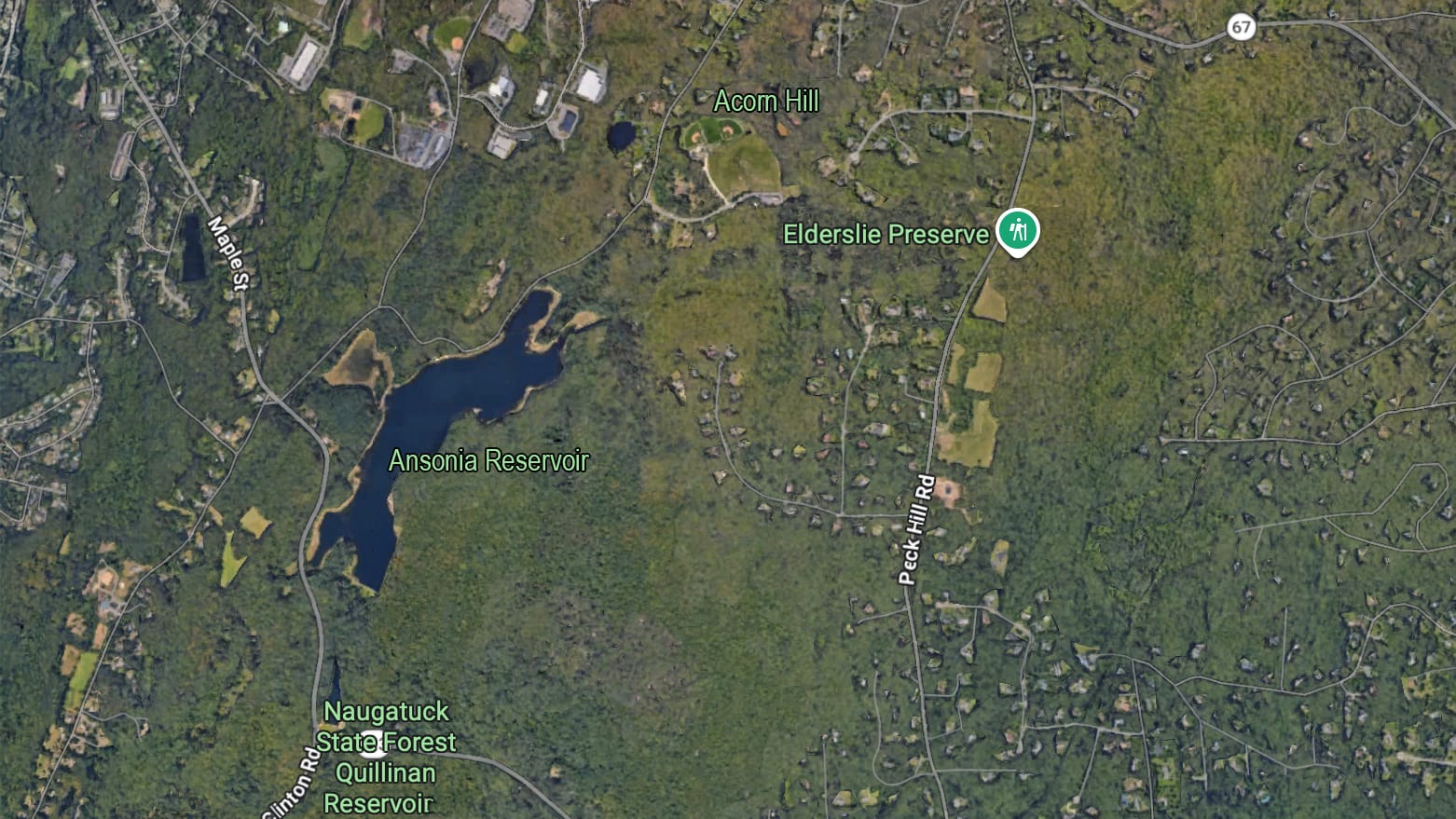
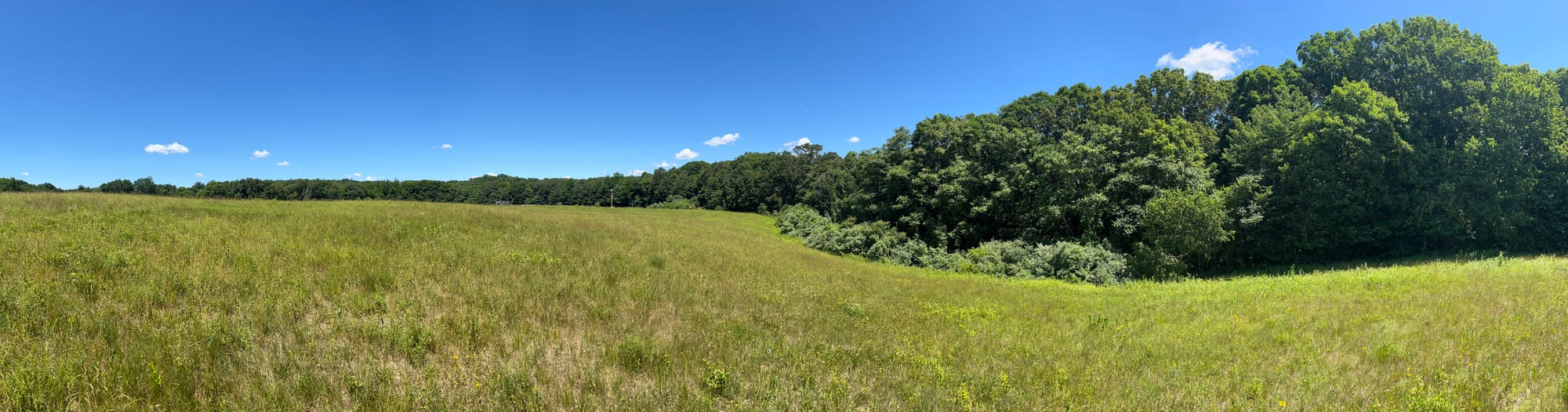
Imagine a community connected by trails, open spaces, and shared destinations. Imagine children arriving by bicycle, neighbors meeting while walking, and families spending an afternoon outdoors. Imagine hearing cheers from a baseball game, and later, listening to spring peepers emerge at dusk while watching a sunset over a meadow as night settles on the landscape.
Because of the long-term advocacy from neighbors, the Acorn Hill parcel was protected under an open space grant in 1974 realizing an open vistas concept. Today the fields and meadow themselves offer something increasingly rare: expansive uninterrupted views of forest and sky. The question is whether we will see it only through the lens of its label (the “dump”/ transfer station) or recognize its potential for the future. We are inspired by spaces such as the High Line in Manhattan, and Fresh Kills Park in Staten Island, which integrate design and ecology to heal sites once profoundly degraded, now thriving habitats and treasured spaces.
Ultimately, the question is one of imagination and trust. Will future generations inherit diminished, isolated, facilities serving single purposes, duplicating what exists in other towns — or places that foster connection — to both nature and community? Acorn Hill can become the latter if we are willing to pursue it together.
Part 2 — Acorn Hill: A Draft Proposal for Restoration, Recreation, Renewable Energy and Community
What could Acorn Hill look like?
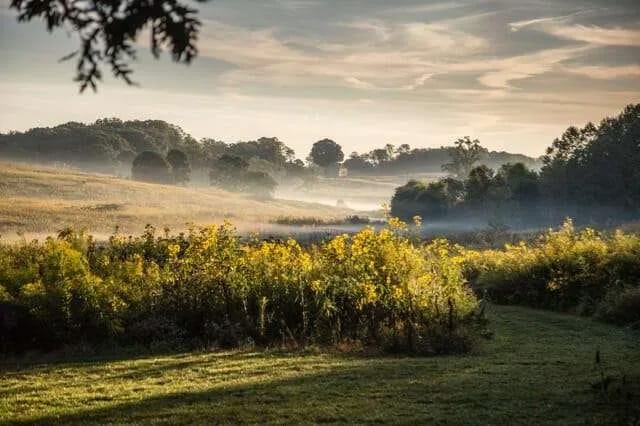
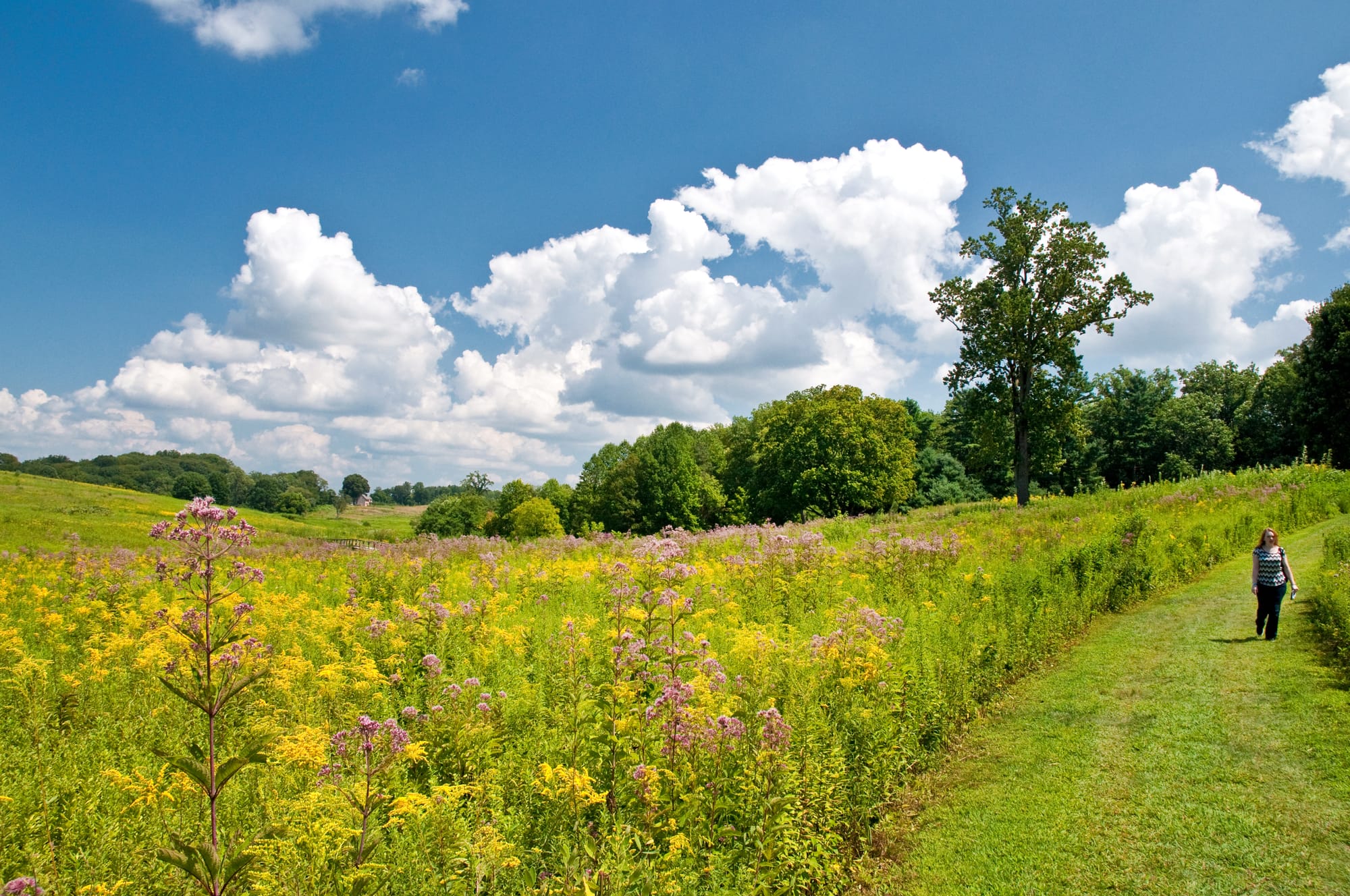
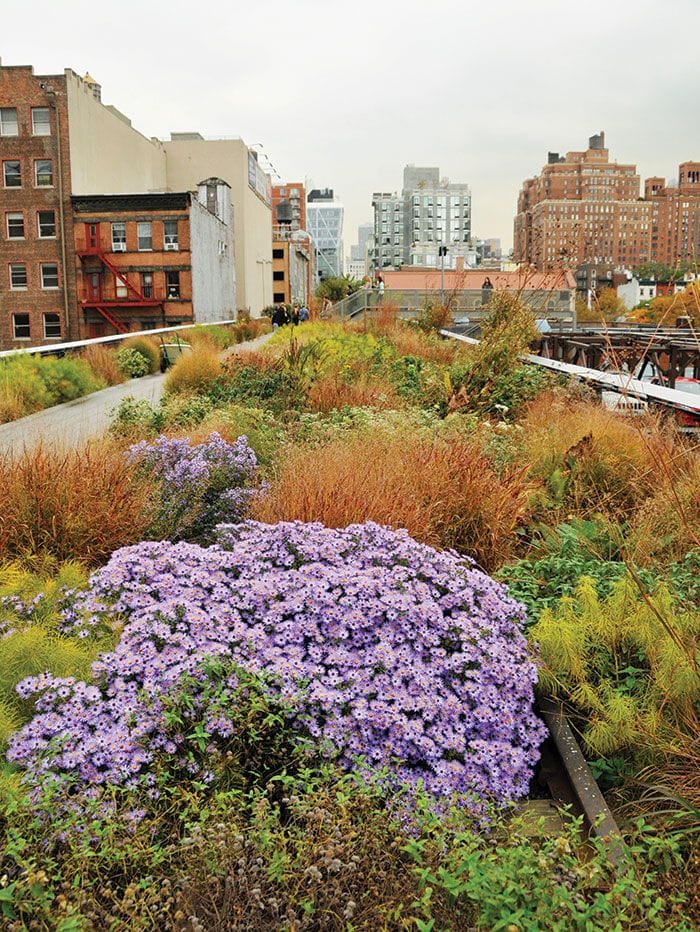
Examples of other parks with native plant meadows, left to right: two images of Longwood Gardens in Lancaster, PA — Longwood in Autumn (photo courtesy of Carol DeGuiseppi from LancasterOnline) and Meadow in Summertime (photo courtesy of Larry Albee for Longwood Gardens), and the Chelsea Grasslands on the High Line, around 19th street, NYC (photo courtesy of Steven Severinghaus by CC BY-NC-SA 2.0 license)
We envision a network of low-cost trails linking the surrounding neighborhoods to Acorn Hill, creating a destination within the town's trail system. Children could walk or bicycle to activities, families could access open space without adding traffic, and visitors could enter from several points rather than a single parking lot. The result would be greater independence, less congestion, and stronger connections between neighborhoods.
In the open meadow, adjacent, but at an adequate remove from the baseball fields, we envision a modest but architecturally distinctive pavilion. Its design could evoke a New England saltbox barn, a beautiful utilitarian structure rooted in Woodbridge’s history. Solar panels could act as the sloped pavilion roof. Additional solar canopies could cover parking areas, roadway approaches, possibly the transfer station itself, and even bleacher seating (with engineered protection from ball strikes); providing shade, reducing heat, while generating clean energy and revenue — all while minimizing consumption of open green space.
These features along with improved restroom facilities would serve baseball families, hikers, equestrians, cyclists, birdwatchers, and neighbors while providing gathering space, and educational opportunities. Revenue would support maintenance, stewardship, and tax relief.
Every intervention should serve multiple purposes: trails improve recreation while reducing traffic. Solar on top of existing hardscape and structures provides shade while generating clean energy and revenue. Gathering spaces and vistas support Beth-Wood and broader community use.
The same thinking applies to ecological restoration. Gradual, low-cost changes in mowing practices could suppress invasive grasses and encourage native species already on site. Supplemental seeding would further increase biodiversity. Over time, portions of the site would resemble the native meadow landscapes that once existed in a mosaic of forests throughout southern New England. Besides supporting wildlife, deep-rooted native grasses would stabilize the landfill, prevent erosion, cleanse our waterways, improve drought resilience, and sequester carbon much more efficiently than the non-native Eurasian cool season grasses currently dominating the site.
The meadow restoration would enhance ecological complexity while creating a more resilient, vibrant, and beautiful landscape. A simple network of mown pathways within the meadow akin to a simplified corn maze would encourage childhood exploration and discovery. Such improvements would cost very little.
Nature is not simply land we own. It is something we inherit and temporarily steward.
Acorn Hill can be a place where children play, families gather, neighbors connect, meadows bloom, and public investments serve multiple generations.
We offer these ideas not as opponents of baseball, community investment, or solar, but as advocates for a broader and more integrated future — one that unites recreation, restoration, renewable energy, and stewardship within an integrated vision.
— Anoka Faruqee and David Driscoll
The writers are residents of Acorn Hill Road in Woodbridge.
Editor’s Note:
Both Community Voice guest opinion pieces and Letters to the Editor reflect the views of their authors and not necessarily those of the Woodbridge Town Chronicle. Submissions are reviewed and curated by the editor. Learn more about our submission process by reading the Submissions and Editorial Guidelines.