Amity and Beecher boards prepare for new school year as enrollment, finances and capital needs come into focus
Beecher board authorizes an additional teaching position if enrollment warrants it, while Amity weighs reserves, special-education growth and future capital projects

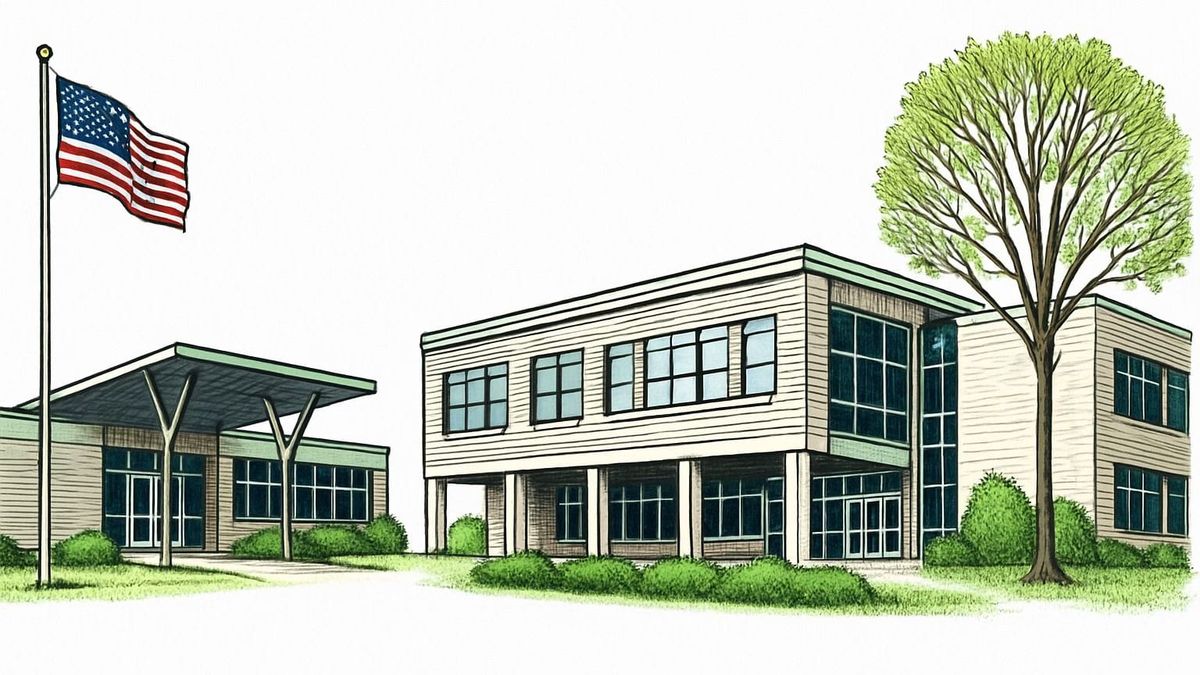
With students preparing to return to classrooms, the two school districts serving Woodbridge students used their August meetings, both taking place on August 17, to look ahead to the new academic year while also confronting longer-term questions involving enrollment, special education, facilities and finances.
For grades Pre-K through 6 at Beecher Road School, the Woodbridge Board of Education (WBOE) reviewed preparations for the Aug. 31 opening of school, closely examined first-grade enrollment, authorized the superintendent to hire an additional teacher if necessary and approved $56,000 for unplanned chiller work (see agenda).
At Amity Regional School District, where Woodbridge students continue in grades 7 through 12, the ABOE reviewed a significant increase in incoming students receiving special-education services, debated how much of the previous year’s surplus should be retained for future capital needs and discussed a separate list of larger projects that could eventually be financed through bonding (see agenda).
WBOE monitors first-grade enrollment
Woodbridge Superintendent Christopher Montini reported that current Beecher enrollment stood at 834 students, compared with 839 at the same point last year. The district ended the previous school year with 875 students, reflecting the enrollment movement that typically occurs during the year.
The Board spent considerable time reviewing enrollment and class sizes, focusing particularly on first grade. As of the meeting, 91 first-graders were registered and another two were in the registration process, potentially bringing enrollment to 93 students across five sections — three classes of 19 students and two classes of 18. The district’s longstanding guideline for kindergarten through third grade is 17 to 19 students per class.
Montini said historical enrollment patterns suggest additional first-graders could arrive before school begins. Administrators had already posted an anticipated teaching vacancy so the district could move quickly if another section becomes necessary and avoid splitting classes after the school year begins.
After discussing whether to act immediately or wait for additional enrollment data, the Board unanimously authorized Montini to add an additional full-time elementary teaching position for 2026-27 should it become necessary.
Montini said the financial impact would initially be closer to adding half a position because the current budget already includes an unfilled half-time Pre-K teaching position. He said the district has been able to cover those Pre-K responsibilities within an existing teacher’s schedule, although additional Pre-K enrollment could require the district to revisit that arrangement later in the year.
Summer programs and preparations
The Board also received reports on two summer programs. The Summer Enrichment Program recorded 623 enrollments, up from 611 last year, with 55 different classes and 80 total offerings. The program expanded from four to five days per week this summer.
Special Services Director Carrie Borcherding reviewed the district’s Extended School Year (ESY) program for students whose individualized education programs call for services beyond the regular school year. About 47% of the district’s special-education population was determined eligible for ESY this year, down from roughly 70% several years ago.
Borcherding said the district continues to examine eligibility practices while also seeing greater needs among some students entering the district.
Administrators also reported on curriculum, custodial and technology work completed over the summer. Staffing changes include six kindergarten sections and additional sections in third and fifth grades, along with two new special-education teachers.
Technology work included completion of new classroom display-board installations and copier upgrades. A server supporting the school’s internet-based telephone system was damaged following a storm and was being replaced, while the district retained backup telephone service through several traditional lines.
Separately, 140 replacement iPads ordered as part of the district’s equipment lifecycle program had to be returned after they were left outside overnight in the rain during delivery. Montini said Apple determined the problem occurred during shipping and agreed to replace the devices.
Year-end funds help absorb unplanned repair
The district expects to return roughly $40,000 from its 2025-26 budget to the Town. Administrators said the year’s favorable variance originated in salaries and benefits, including savings associated with a vacant teaching position and employee leaves.
Some available year-end funds were used for supplies and equipment, including new AEDs, bicycles for a kindergarten learn-to-ride program, iPads and science materials.
The district also shifted approximately $50,000 in eligible Extended School Year labor expenses back into the 2025-26 fiscal year. Business and Operations Director Donna Coonan explained that doing so reduced the amount returned to the Town but freed approximately the same amount in the current year’s budget to help cover $56,000 in chiller work that had not been budgeted.
One side of the chiller had experienced repeated problems, and attempts to refurbish its control equipment were unsuccessful. The Board unanimously authorized the administration to replace control equipment for both sides of the Trane system through the manufacturer’s renewal program at an approximate cost of $56,000. The Board also approved an exception to its competitive bidding requirements, allowing the district to proceed directly with Trane under an equipment-service exception in its purchasing policy.
Members reviewed the proposed calendar for development of the 2027-28 operating budget and agreed to retain the accelerated schedule used last year, intended to allow the Board to complete its budget work before the December holidays.
Beecher project update
Board Vice Chair Lynn Piascyk, who also serves on the Beecher Road School Building Committee, updated members on the proposed demolition-and-reconstruction project and the committee’s public outreach.
Piascyk said the proposed referendum is expected Oct. 13. Board members also received a draft of the Building Committee’s second newsletter and discussed how it presents the financial choice between continuing to maintain the existing Beecher facility and constructing a new school.
The Chronicle examines separately this week what the maintain-versus-rebuild figures represent and how future lifecycle replacement factors into the comparison — see related article.
The WBOE also unanimously adopted a package of business and operations policies and formally approved two goals for 2026-27: fostering a dynamic learning environment that prepares learners for a rapidly evolving world, and creating and adopting a long-range plan to ensure the Beecher Road School building meets the needs of all students.
Click below to watch WGATV's full recording of the August 17, 2026 WBOE meeting.
Amity sees sharp increase in special-education enrollment
Meanwhile, at Amity, administrators reported an unusually large incoming group of students receiving special-education services from the three elementary districts.
The district is onboarding 64 special-education students this year, compared with incoming groups historically in the 40s. Officials said the next two incoming cohorts are currently projected at more than 70 students each.
Administrators said special-education prevalence rates among the three elementary districts now range from roughly 12% to 20%. Amity also added a high-school special-education teacher after seeing a net increase of more than 35 students receiving special-education services at the high school.
The discussion highlighted both the staffing implications and the longer-term financial significance of serving a growing special-education population.
New state grants go to Amity, Orange and Bethany
The Amity discussion came the same day Gov. Ned Lamont announced the first awards under Connecticut’s new High-Quality Special Education Incentive Grant Program, intended to help districts establish or expand in-district and regional services and reduce reliance on out-of-district placements.
Amity Regional School District 5 received $11,000 in program funding. Two of its three constituent elementary districts received substantially larger awards: Orange received $350,000, the maximum available to an individual district, while Bethany received $321,886. All three awards were for programming rather than capital improvements. Woodbridge was not included on the state’s list of grant recipients. Applications for the competitive program were due July 10.
Statewide, 41 programs received a combined $10.6 million, including approximately $8.9 million for programming and $1.7 million for capital improvements. Eligible programming expenses include staffing, assistive technology, instructional materials, professional development and planning and start-up costs.
Amity weighs what to do with year-end funds
Amity ended the 2025-26 fiscal year with approximately $1.6 million in unused operating funds and excess revenue, prompting a lengthy discussion about how much should be retained for future needs rather than returned to Bethany, Orange and Woodbridge.
Amity Superintendent Dr. Jennifer Byars recommended transferring $1.162 million, the statutory 2% maximum, into the district’s Educational Expenditures Reserve Fund.
ABOE members debated the merits of building reserves now to reduce future borrowing and help smooth the impact of upcoming capital expenses, versus returning more of the money to the three towns.
No decision was made. The Board postponed action until September, allowing members additional time to consider the appropriate reserve level.
Larger capital needs are taking shape
The reserve discussion comes as Amity begins considering significant capital needs of its own. Director of Finance and Administration Terry Lumas clarified during the meeting that the district is working with two separate capital lists: its regular five-year capital plan and another group of larger projects being considered for potential bond financing.
The prospective bond list includes major work such as roofs, HVAC systems and athletic fields, although its final scope, cost and timing have not yet been established. Roof work alone was described during the meeting as approximately $18 million, while previous discussion of the district’s Three-Year Operating Forecast indicated a potential future bond of approximately $51 million.
The distinction between projects funded through the district’s regular capital plan and larger projects that could be financed through bonding became important during the reserve discussion. Money accumulated in the district’s capital reserve could potentially be used toward projects that might otherwise require borrowing, reducing the amount ultimately financed.
The Board also dealt with a more immediate capital project at Amity Regional High School. Bids for the high-school library renovation came in approximately $245,000 above the earlier estimate, with furniture and fixtures adding to the projected shortfall.
The Board authorized up to $300,000 in additional funding from money already designated for the project, increasing the project authorization from approximately $3.15 million to as much as $3.45 million. The project may qualify for state reimbursement at a rate of 42.86%.
The precise scope, cost and timing of Amity’s larger prospective bond package remain under development.
Click below to watch Amity's full recording of the August 17, 2026 ABOE meeting.