Board Watch: Housing, Beecher Building Committee, Economic Development hold late-summer meetings
Housing planning turns toward public outreach and a call for input, Beecher committee maps the road to Oct. 13 referendum, and EDC advances fall priorities

Board Watch is a recurring feature designed to provide a concise walk-through of activity as we keep track of the week's civic work. Longer-form articles will appear when issues warrant deeper coverage.
Housing Commission — August 17, 2026
At its August meeting, the Housing Commission began laying the groundwork for public outreach as the Town moves forward with preparations to develop the housing growth plan required under recently enacted state legislation (see agenda).
Commission members discussed working with the South Central Regional Council of Governments (SCRCOG) on a public forum tentatively envisioned for early October. Rather than beginning by telling residents which housing issues they should consider, Chairman Dominic Thomas proposed first asking residents to submit their own questions and concerns about housing in Woodbridge, which could then help shape the forum and other educational materials.
Residents are expected to be invited to submit questions they would like the Commission to address as it develops the housing growth plan. The Commission discussed collecting those questions through Town communication channels, with responses directed to the Town. Details about how and where to submit questions are expected to be provided as the outreach effort is finalized.
After a brief discussion about whether the Commission’s work should include returning to an abandoned 2025 update of the Town’s Affordable Housing Plan, Thomas suggested instead using the existing plan approved in May 2022 as a starting point for the Commission’s next steps. Members agreed to revisit properties identified during that earlier planning process while also considering underutilized buildings, possible conversions and other opportunities that could contribute to the new housing growth plan.
For residents interested in where additional housing might be considered, one section of the existing plan may be particularly relevant. The “Location Analysis” on pages 14–15 identifies and discusses specific areas and properties considered during the earlier planning process. Those locations are not necessarily the sites the Commission will ultimately recommend, as several are no longer available for development, but the list provides a useful starting point for understanding the kinds of locations previously considered. As the Commission begins identifying potential locations for the new housing growth plan, this is also an area where residents may want to follow the discussion closely and offer their own suggestions or concerns.
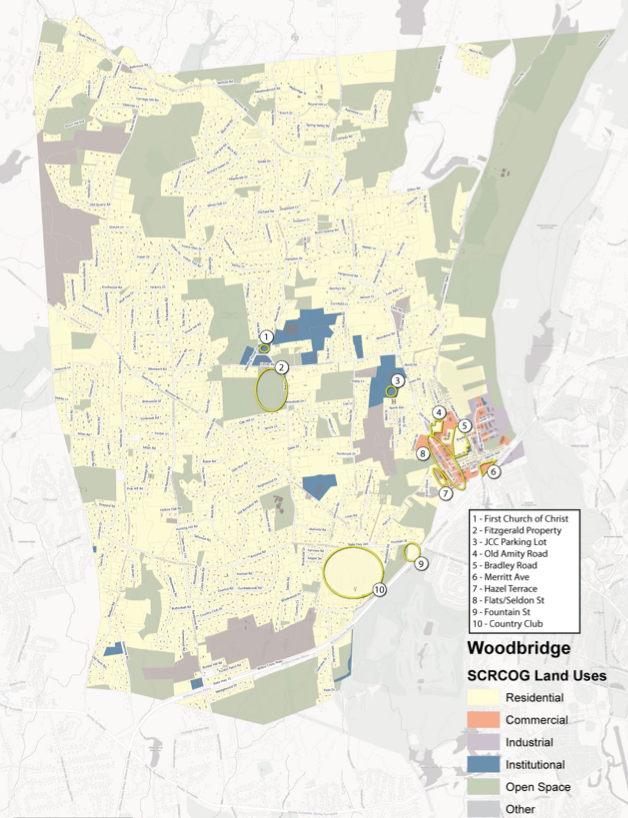
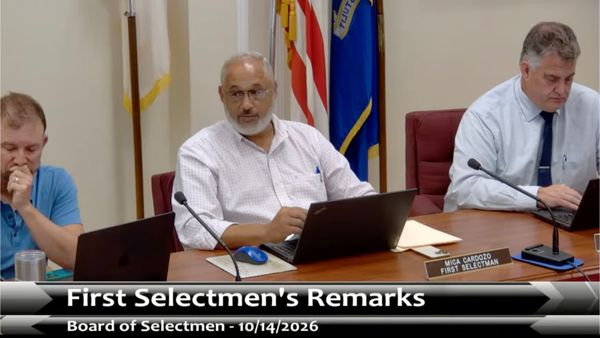
First Selectman Mica Cardozo, who attended the meeting remotely, said SCRCOG is assisting the Town with GIS work that could help identify properties with development potential and provide information useful to the Housing Commission, Town Plan and Zoning Commission and Economic Development Commission.
The discussion included three Town-owned areas Cardozo said have already been examined for possible development: 312 Rimmon Road, the Country Club of Woodbridge property and the collection of Forest Road parcels commonly referred to as the theater lots. Of those three, the Country Club property appears in the earlier Affordable Housing Plan’s Location Analysis; 312 Rimmon Road and the theater lots do not, illustrating how the universe of properties under consideration has changed since that analysis was prepared. No specific development proposal for any of the three properties was discussed at the meeting.
Thomas also said he expects to attend the September 8 Town Plan and Zoning Commission meeting to discuss the Housing Commission’s work and coordination between the two commissions, including zoning approaches that could encourage housing development.
The Commission also received a presentation from Board of Selectmen liaison Maria Madonick and Beecher Road School Building Committee Chairman Marty Halprin on the proposed Beecher Road School demolition-and-rebuild project. The discussion focused in part on anticipated state reimbursement and the potential for additional reimbursement tied to the Town’s compliance with the new housing-growth-plan requirements.
The Chronicle examines separately this week what the Beecher project's maintain-versus-rebuild figures represent and how future lifecycle replacement factors into the comparison — see related article.
Click below to watch WGATV's full recording of the August 17, 2026 Housing Commission meeting.
Beecher Road School Building Committee — August 18, 2026
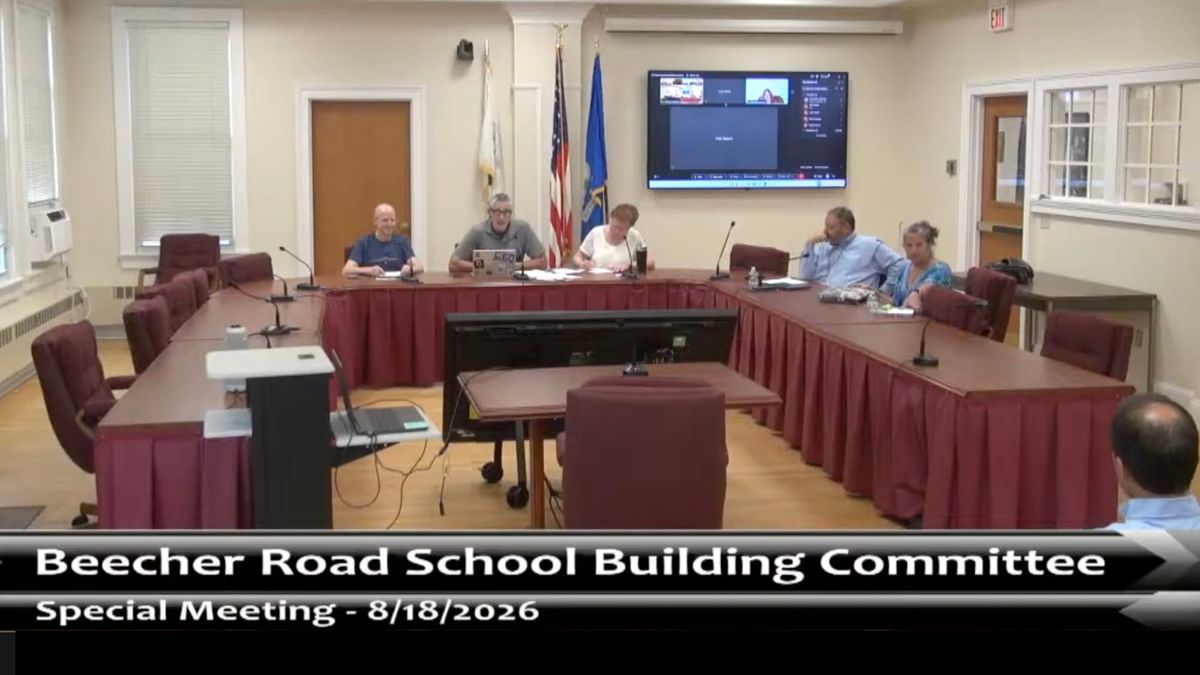
The BRSBC held a brief special meeting August 18 as it moves into an intensive period of public outreach ahead of a planned October 13 referendum on the demolition-and-rebuild project (see agenda).
Chairman Marty Halprin said the committee’s second newsletter was complete and expected to be posted to the project website by the end of the week and mailed townwide the following week. Members also reviewed a detailed outreach schedule that includes appearances before Town boards and commissions, Beecher parent open houses, community forums and other events.
The calendar distributed with the meeting materials provides considerably more detail about the referendum timeline. It anticipates a Sept. 17 Board of Finance review, followed by a Sept. 23 special Board of Selectmen meeting to approve and recommend the bond resolution and set dates for a Special Town Meeting and referendum. A Special Town Meeting is proposed for Oct. 6, with the referendum Oct. 13.
According to the calendar, approval on Oct. 13 would require a two-thirds majority. If the proposal receives less than two-thirds approval, the calendar anticipates a possible second referendum Oct. 27, when a simple majority would be required.
The calendar also identifies an important date for the committee’s public communications. It says the advocacy limitations of Connecticut General Statutes §9-369b would begin when the Board of Selectmen acts on the referendum resolution — currently contemplated for Sept. 23. Committee members referred during the meeting to the period that follows as the “quiet period,” saying their work creating new explanatory materials would pause at that point.
That leaves the committee just over five weeks from the Aug. 18 meeting to complete its remaining pre-referendum communications. Members discussed replacing a third full newsletter with a large postcard highlighting what they described as the central financial choice facing voters: continuing to invest “tens of millions of dollars” in the existing Beecher facility or constructing a new school. Members were asked to email ideas to Halprin so they could be compiled and sent to communications consultant Tall Timbers for development.
The Chronicle examines separately this week what the Beecher Project's maintain-versus-rebuild figures represent and how future lifecycle replacement factors into the comparison — see related article.
Meanwhile, the committee expects to turn much of its attention during the fall to preparing requests for proposals for an architect and owner’s project manager. Halprin said community members with expertise in those fields have offered to assist as committee members begin developing the RFPs. The committee’s outreach calendar includes a community forum Aug. 29 at the Woodbridge Town Library, followed by its next working meeting Sept. 1.
Click below to watch WGATV's full recording of the August 18, 2026 BRSBC meeting.
Economic Development Commission — August 19, 2026
The EDC spent much of its August 19 special meeting discussing how the Town might develop a more deliberate economic growth strategy, including identifying the types of development Woodbridge could support, expanding the commercial portion of the Grand List, and considering incentives to attract private investment (see agenda).
Commission members discussed potential mixed-use and housing development, the relationship between population growth and commercial activity, and the possibility of using property-tax incentives permitted under state law. Rather than immediately identifying particular businesses or developments to pursue, several members advocated first developing a clearer picture of Woodbridge’s existing business base and determining what kinds of growth the Town could realistically support.
The extended discussion exposed a disagreement over what the commission means by diversifying Woodbridge’s tax base. While several members proposed increasing the share of revenue generated by businesses, others believe that substantial grand-list growth would likely require large multifamily developments as well as businesses. Connecticut assessment classifications treat larger apartment properties separately from conventional residential property — and group them with commercial property for some statistical purposes — even though apartments remain residential development in ordinary land-use terms. The distinction also matters when considering the fiscal impact of grand-list growth because apartments can add substantial taxable value, but they also bring residents who may increase demand for municipal services, including schools — costs that generally are not associated with commercial development.
The Commission plans to continue building an inventory of more than 300 businesses and other entities, including information about their industries and activities. Two Amity students participating in the VOICES program are expected to assist with that work beginning in September. The Commission also expects to continue working with the Town Planner as it develops its economic-development goals and strategy.
Members also discussed improving coordination among Town boards and commissions, particularly where economic development, housing, zoning and other initiatives overlap. The Commission voted to recommend that the Board of Selectmen formally establish regularly scheduled meetings among boards and commissions to coordinate and discuss opportunities to work together on issues affecting the Town. After lengthy discussion among members, the motion passed with one commissioner opposed.
The Commission also reviewed feedback from a July 29 public meeting on the Business District Connectivity project (see WTC article 8/3/2026). Among the issues discussed were pedestrian safety at Bradley Road, proposed traffic-calming improvements, sidewalk connections and the state’s continued rejection of a traffic signal at the Amity Road intersection under current criteria. Members said additional coordination with businesses will occur to alert them of any potential disruptions to traffic flow in the business district as the project moves toward construction.
A planned discussion of Woodbridge marketing, branding and messaging was deferred. The Commission expects to consider both its goals and the marketing work at upcoming meetings and may schedule an additional special meeting in September. Its next regular meeting is Sept. 10.
Click below to watch WGATV's full recording of the August 19, 2026 EDC meeting.