As the state’s housing planning framework takes shape, Woodbridge officials ask: How will “the number” be determined?
Housing Commission discusses growth targets, affordable housing benchmarks, and the need for public understanding before key decisions are made

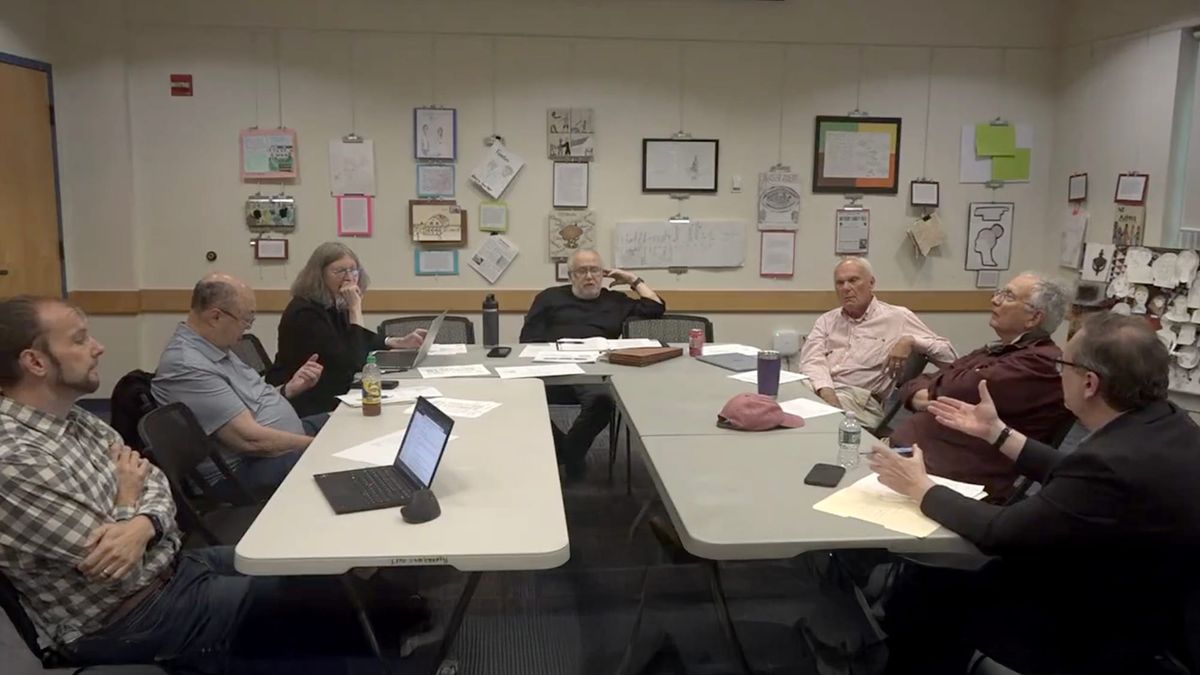
The Woodbridge Housing Commission spent much of its June 15 meeting trying to answer a question that remains unresolved across Connecticut: How many new housing units will Woodbridge eventually be expected to plan for under the state’s new housing growth framework?
The discussion featured an extended conversation with invited guests, Town Plan and Zoning Commission Chair Jeff Kennedy and Town Planner Mike D’Amato. They focused their remarks on Connecticut’s recently adopted housing legislation, the process that will ultimately assign housing growth targets to municipalities, and their views on how the Housing Commission may assist in Woodbridge’s efforts to meet such targets once they are known (see agenda).
While no specific number has yet been assigned to Woodbridge, officials described a process that will begin with the state establishing regional housing needs, followed by regional councils of governments (COGs) distributing housing growth targets among member towns. Under the current framework, Woodbridge will eventually receive a housing target and then decide whether to participate in a regional housing growth plan or pursue its own local plan.
A recurring theme throughout the discussion was that many aspects of the new law remain unclear. D’Amato noted that the new law emerged from a special legislative session in the fall of 2025 and was adopted without the traditional public hearing and stakeholder review process that often accompanies major planning legislation. As a result, many municipalities, planners, and local officials are still waiting for guidance from the state Office of Policy and Management (OPM) and regional planning organizations before they fully understand how implementation will work. “The answer right now is nobody has the answer,” D’Amato said.
Commission members repeatedly returned to what may become the most important question facing Woodbridge in the months ahead: whether the housing target ultimately assigned to the town is reasonable.
D’Amato suggested that regardless of whether Woodbridge chooses to participate in a regional plan, local officials will likely need to conduct their own analysis and explain the assigned number to residents. “We’re going to probably have to explain why we think that we should go with that and not go our own way,” he said.
Moratoriums, affordable housing percentages, and growth targets
The meeting also highlighted how several different housing benchmarks are often discussed together even though they serve different purposes.
Commission members spent time discussing Connecticut's affordable housing moratorium provisions under Section 8-30g and the point system used to qualify for a temporary moratorium. Housing Commission Chair Dominick Thomas said that a moratorium should not be viewed as a way to stop housing development, but rather as an opportunity for a town to reassess its housing strategy after reaching certain milestones.
D'Amato cautioned against placing too much emphasis on moratoriums, noting that Woodbridge remains at approximately 1.24% affordable housing and would need many additional affordable units before becoming eligible for a temporary moratorium. He said he was concerned that residents sometimes assume a moratorium would solve challenges that it does not actually address. D'Amato noted that even if a town successfully obtains a four-year moratorium, it ultimately faces another round of planning challenges when that period expires, describing the process as launching “another four-year fire drill” to determine what comes next.
The exchange illustrated a broader theme that surfaced repeatedly during the meeting: multiple housing metrics are often discussed interchangeably even though they measure different things. The state's 10% affordable housing threshold under 8-30g, the separate point system used to qualify for a temporary moratorium, and the new housing growth targets being developed under Connecticut's Housing Growth Planning framework are distinct programs with different calculations and objectives. Commissioners discussed the need for additional public education and outreach to help residents understand those differences as the state planning process moves forward.
From HB-5002 to PA 25-1
The discussion also recalled an earlier chapter in Connecticut’s housing debate. Residents may remember that under House Bill 5002, a vetoed 2025 proposal that would have assigned “fair share” housing targets to individual municipalities, Woodbridge was projected to receive an allocation of approximately 332 housing units over a ten-year period (see WTC article 8/24/2025).
Governor Ned Lamont ultimately vetoed that legislation, arguing that the town-by-town allocation formula was flawed. During a news conference on June 5, Lamont reportedly described the methodology used to generate municipal housing targets as “kind of dumb” and said the state needed a better approach for encouraging housing growth. At the time of his veto, the governor also expressed concern that assigning housing numbers from Hartford without sufficient local involvement would create conflict rather than cooperation between municipalities and the state (see CT Insider June 8, 2026).
Public Act 25-1, which contains the housing growth planning framework now being implemented, was developed after that veto and replaced the earlier fair-share approach. Yet several of the questions raised during the Housing Commission meeting would have been familiar to participants in the HB-5002 debate: how housing targets will be calculated, whether the resulting number is reasonable, and how local officials will explain that number to residents once it is assigned.
That point was reinforced by Thomas, who noted that understanding how the numbers are developed will be essential for both local officials and the public. Commissioners discussed the need for extensive public education and outreach as additional guidance becomes available from the state.
Several participants observed that the process is moving quickly even as many details remain unresolved. Additional state guidance is expected this summer, with regional planning agencies expected to play a significant role in translating statewide housing goals into targets for individual municipalities.
Commissioner Lewis Shaffer highlighted the challenge of translating housing discussions into measurable outcomes, noting that Woodbridge's affordable housing percentage has changed only slightly in recent years. “My frustration comes from the fact that we're at 1.24 now and four and a half years ago we were at 1.17. What have we done?” he asked. The comment underscored a broader question facing local officials as they await additional state guidance: not only what housing target Woodbridge may ultimately receive, but whether the town has realistic pathways to achieving the housing goals embedded in state policy.
The meeting also included discussion of improving collaboration among Town boards and commissions. Thomas suggested the eventual creation of an informal working group involving representatives from TPZ, Conservation, Inland Wetlands, Economic Development, and the Housing Commission to help coordinate discussions as housing planning moves forward. Kennedy expressed openness to additional collaboration and invited the Housing Commission to share research and recommendations with TPZ as the process develops.
The discussion also touched on the practical challenges facing local boards as Connecticut continues to roll out new housing-related requirements. Kennedy referenced the TPZ’s recent adoption of Opportunity Housing regulations ahead of a July 1 state deadline (see WTC article 6/8/2026), and it was noted that municipalities are sometimes required to make policy decisions before all state guidance and implementation details are available. The experience was cited by Kennedy as an example of how rapidly changing state housing policies can be difficult for local officials and residents alike to follow.
LISC tour highlights examples from other Connecticut towns
As the meeting agenda progressed, commissioner David Lober reported on a recent Local Initiatives Support Corporation (LISC) housing tour attended by representatives from the Housing Commission and other town bodies. Participants visited three affordable housing developments in Connecticut shoreline communities, including projects in Old Saybrook and Essex developed through the HOPE Partnership, a nonprofit affordable housing organization.
Lober said the developments were well-designed and visually indistinguishable from comparable market-rate housing, emphasizing the quality of their construction, maintenance, landscaping, and integration into surrounding neighborhoods.
The discussion that followed focused on how the host communities made the projects possible. Participants noted that some of the towns visited lacked municipal sewer service, prompting questions about the zoning regulations, infrastructure, and planning strategies that supported the developments. The exchange reflected a broader interest among commissioners in identifying housing models that may offer lessons for Woodbridge as it navigates evolving state housing requirements.
For now, however, commissioners acknowledged that many of the most significant questions — including the size of Woodbridge's eventual housing target, the methodology used to calculate it, and how residents will evaluate whether that target is reasonable — remain unanswered. Those answers are expected to emerge over the coming months as state and regional agencies release additional guidance and begin assigning housing growth targets to municipalities across Connecticut.
The meeting concluded when the library closed for the evening, cutting short consideration of several agenda items. As commissioners discussed the demands that future growth may place on the town, the meeting itself offered an ironic reminder that growth requires more than buildings. The meeting room already existed. The constraint was the staffing and operating budget needed to keep it available longer for public use.
Housing Commission meetings are open to the public and recordings, when made, are available on the Town’s YouTube channel, WGATV79. Click below to watch the full recording of the June 15, 2026 meeting.