Conservation Commission focuses on Acorn Hill, light pollution, and forest stewardship
July meeting includes extensive public comment, ecological research presentation, and updates on conservation initiatives

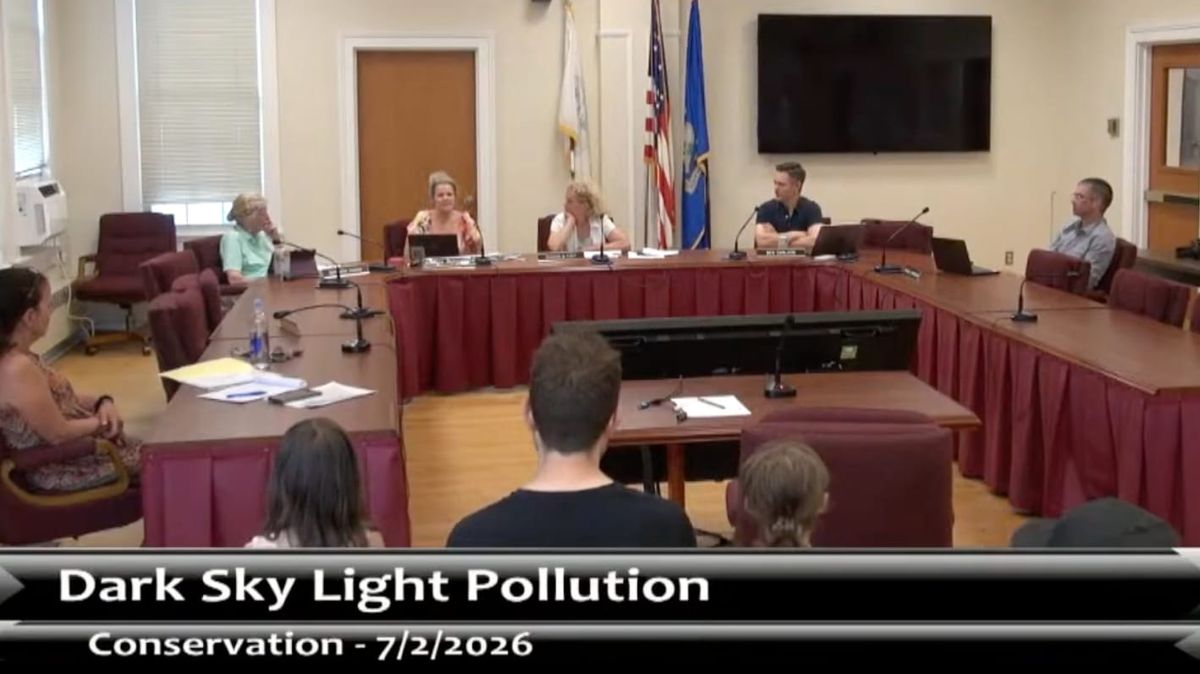
The Woodbridge Conservation Commission's July 2 meeting featured extensive public comment related to the future of the town-owned property at 85 Acorn Hill Road and a proposal by the BethWood baseball league to install field lighting at the athletic complex there. The lighting proposal was recently reviewed by the Commission on the Use of Public Properties (CUPOP), which has forwarded its recommendation to the Board of Selectmen for further consideration. Residents who spoke urged a broader discussion of the property's long-term future and its role within Woodbridge's network of open spaces. Commissioners later reviewed research on light pollution and discussed whether the commission should eventually provide recommendations regarding outdoor lighting and light pollution while the Board of Selectmen's review process continues (see agenda).
Public comment and input from residents
The meeting opened with comments from Acorn Hill Road residents Anoka Faruqee and David Driscoll who presented what they described as an early-stage concept for the future of the Acorn Hill property. Building on ideas outlined in their recently published Community Voice submission (see WTC article June 29, 2026), speakers described a concept that would combine recreation, conservation, ecological restoration, renewable energy, and public access while preserving the site's open-space character and regional environmental connections.
Several residents also spoke to urge the commission to consider Acorn Hill's role within a larger network of open space that includes the Ansonia Reservoir, Naugatuck State Forest, and Elderslie Preserve. Acorn Hill residents shared personal perspectives on the property's history, including its agricultural past and longstanding family connections to the land. Speakers referenced the history of the Acorn Hill property and the development of the existing ball fields, submitting excerpts from 1995 Board of Selectmen discussions that described the original vision for the site and limited development.
Speakers emphasized the importance of habitat restoration, scenic preservation, environmental stewardship, and maintaining the property's connection to the broader landscape. An 11-year-old Woodbridge resident also addressed the commission, describing the value of Acorn Hill's natural environment and encouraging continued protection of wildlife and open space. Additional speakers encouraged the commission to consider broader dark-sky policies and the cumulative effects of artificial lighting throughout the community.
Commissioner presents research on light pollution
Following public comment, Commissioner Marissa Jacko-Jones delivered a presentation summarizing scientific literature on artificial light at night and its effects on wildlife, ecosystems, and human health. Jacko-Jones reviewed research concerning impacts on migratory birds, insects, turtles, fish, bats, plants, and other species, as well as studies examining potential links between nighttime light exposure and human health outcomes. She noted that light pollution is increasing globally and argued that artificial lighting can disrupt natural biological cycles, alter wildlife behavior, fragment habitat, and affect biodiversity.
The presentation prompted a broader discussion among commissioners about outdoor lighting policies, including the proposed Acorn Hill field lighting project. Commissioners discussed potential impacts on wildlife, migratory species, and dark-sky conditions, and expressed interest in conducting additional research and reviewing examples from other communities before considering whether to provide recommendations regarding lighting on publicly owned land.
Forest resiliency grant planning and other outreach efforts
Later in the meeting, Chair Sharon deKadt and Vice Chair Ben Carlson updated the commission on efforts to pursue a Connecticut Department of Energy and Environmental Protection Forest Resiliency Grant and ongoing discussions regarding long-term conservation protection for portions of the former Country Club of Woodbridge property. DeKadt noted that conversations with the Board of Selectmen remain ongoing regarding ways to preserve portions of the property while remaining consistent with the Selectmen's CCW Master Plan.
Carlson reported that the Forest Resiliency Grant application is now available and that applications are due August 31. The grant proposal would seek funding for habitat restoration, invasive species management, and other forest stewardship activities on portions of both the Fitzgerald Property and the former Country Club of Woodbridge open-space areas. Commissioners also referenced their June 8 appearance before the Board of Selectmen to discuss the proposal and the importance of demonstrating long-term commitment to conservation and stewardship of the affected properties (see WTC article June 15, 2026).
Commissioner Michael Honsberger summarized recent site visits with consulting forester Eric Hansen, who reviewed both the Fitzgerald Tract and portions of the former Country Club property. At Fitzgerald, Hansen recommended selective canopy openings, invasive species management, and other forest-management practices intended to improve long-term ecological resilience, encourage regeneration of native tree species, and create a more diverse age structure within the forest. Honsberger said the forester generally concurred with recommendations previously developed through the state's forest resiliency planning process.
Discussing the former-CCW property, DeKadt said Hansen identified opportunities to preserve and actively manage portions of the site's young-forest and transitional habitat areas. Commissioners discussed maintaining some areas through periodic mowing and other stewardship practices to support wildlife diversity while remaining compatible with the property's Master Plan.
The commission voted to allocate $250 toward a nesting box project being developed in partnership with local trail volunteers and the Audubon Society. Carlson reported that materials have been ordered and noted opportunities for volunteers and students to assist with installation and monitoring.
Commission members also discussed the creation of a “Friends of Conservation” group to connect residents interested in conservation projects, habitat restoration, invasive species management, and other stewardship activities. The commission also reviewed plans to expand the conservation section of the town website with educational resources on topics such as native plants, pollinator habitat, composting, open-space preservation, and dark-sky practices.
Looking ahead, commissioners agreed to continue meeting in August rather than taking a summer recess in order to advance work on the pending forest resiliency grant application. The next regular meeting is scheduled for August 6.
Click below to watch WGATV's full recording of the July 2, 2026 Conservation Commission meeting.