Beecher referendum set after divided votes by Finance Board and Selectmen
Both boards split along party lines on $118.5 million proposal; WBOE Facilities chair does not sign final letter to community

An Oct. 13 town-wide referendum on the proposed $118.5 million Beecher Road School project is now set, following action by three Town boards over two days last week.
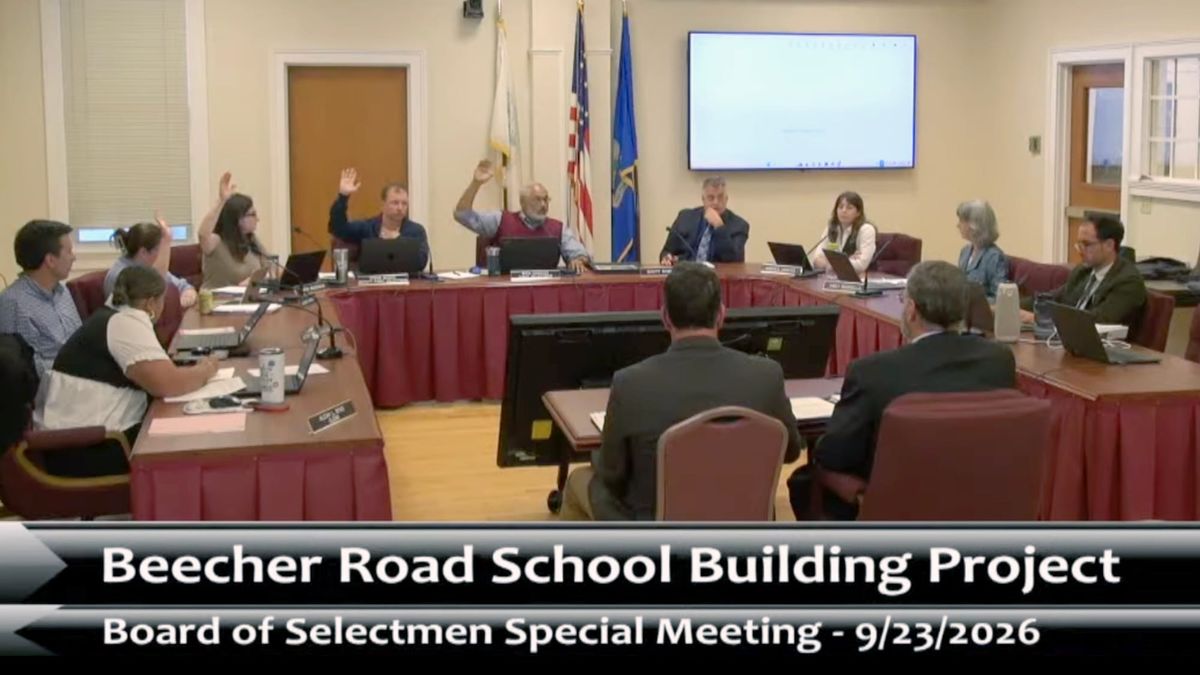
On Tuesday, Sept. 22, the Board of Finance met to further consider and act on the project after initial consideration just five days prior. Later that evening, the Woodbridge Board of Education received a project update and considered a letter to the community before restrictions on Town communications began. The following night, Sept. 23, the Board of Selectmen took the final Town action needed to call the Oct. 6 Special Town Meeting and Oct. 13 referendum. The vote to proceed split 4–2 along party lines, with the Board’s four Democratic members voting in favor and its two minority-party members opposed.
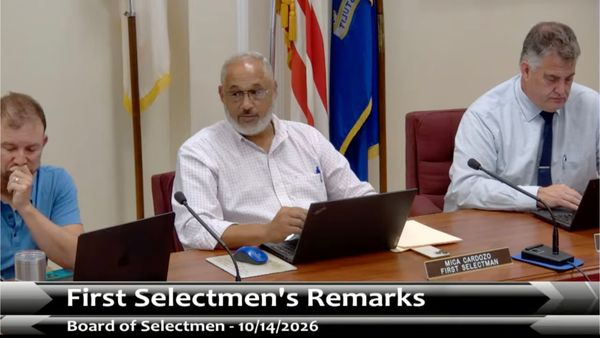
Town officials made two final communications about the project in the hours before the Selectmen acted. A letter to the community signed by eight members of the nine-member Board of Education, which the Board had discussed the previous evening, was distributed at 3 p.m. Sept. 23. An email from First Selectman Mica Cardozo followed 15 minutes before the Selectmen’s meeting began. With the referendum now set, the Town has entered the quiet period leading to the vote.
The three meetings — and those final communications — added information and further discussion about the proposal voters will be asked to decide. Across the meetings, many of the same questions resurfaced from different perspectives: what the Town would actually be authorizing, how much state reimbursement can be expected, what it would cost to retain and repair the existing school, and what decisions remain before construction could begin.
Below, the Woodbridge Town Chronicle summarizes the Beecher-related portions of all three meetings.
Board of Finance — Sept. 22
After receiving the Beecher project for its review for the first time only days earlier, the Board of Finance reconvened Sept. 22 to further consider — and act on — the proposed $118.5 million appropriationand bond authorization (see agenda).
Much of the discussion returned to questions raised at the Board’s Sept. 17 meeting about state reimbursement, eligible and ineligible project costs, the Town’s ultimate borrowing requirement and what authority would remain if voters approved the project.
It was explained that the state conducts reviews at multiple stages and audits the project after completion, meaning the final reimbursement amount would not be known until later. Board members discussed the possibility that some costs now expected to be reimbursable ultimately might not be, as well as the ability to modify the project if reimbursement came in below expectations.
Members also debated whether the Board of Finance had been involved early enough in a project it was now required to formally consider. Several said the Board had previously understood its role to be advisory and had not had sufficient opportunity to examine the project within the context of the Town’s other anticipated capital needs.
Board member Paul Rossi said he could not support the resolution because of unresolved questions about reimbursement, borrowing, other capital projects and alternatives. Among them, he raised the possibility of preserving Beecher’s A, B and C wings while undertaking a smaller rebuilding project. The discussion reflected a broader disagreement over whether alternatives to the proposed new school had been adequately developed and priced.
Board member Scott Prudhomme also explained his opposition, saying the Town could not afford to consider Beecher in isolation from its other capital needs. He called for a broader assessment that would prioritize those projects, account for their combined tax impact and develop a revenue-growth plan before committing to the proposed project.
The Board also discussed the estimate for maintaining the existing school. During the meeting, the cost was described as having initially ranged from $30 million to $60 million, with a more recent estimate of approximately $45 million developed using information from facilities personnel, engineers and professional estimators. No detailed report supporting that estimate was presented to the Board of Finance, and the Town has not publicly released one.
Several members emphasized that, regardless of the referendum outcome, Beecher’s building needs would still have to be addressed. Others focused on the tax impact of the proposed project and the importance of considering it alongside the Town’s other anticipated capital spending.
The Board ultimately voted 4–2 along party lines to recommend the appropriation and bond resolution to the Board of Selectmen, allowing the proposal to proceed to the next step in the referendum process. The Board’s four Democratic members voted in favor, while its two minority party members, Paul Rossi and Scott Prudhomme, voted against.
Click below to watch WGATV's full recording of the September 22, 2026 BOF meeting.
Board of Education — Sept. 22
The same night as the Board of Finance meeting, the Woodbridge Board of Education also met (see agenda). During the meeting, the Board received an update on the building project and considered a letter to the community that members hoped to distribute before the Town entered the pre-referendum quiet period.
Much of that discussion focused on how confidently the Board could describe the project’s anticipated state reimbursement and the Town’s estimated $55.5 million share. Board member Jeff Hughes, who chairs the WBOE Facilities Committee, questioned whether the WBOE should make firm statements about those figures. He said the Board was on firmer ground discussing the school district’s needs — including space, accessibility and building systems — and questioned whether it was exceeding its role by weighing in on project financing.
Hughes also questioned language stating that the state reimbursement had already been secured and whether the Board could say with certainty that the Town’s share would be $55.5 million. Other members said the figures came from the Town’s contracted consultants involved in the project and reflected the best information currently available.
The Board revised the letter during the discussion, changing the $55.5 million statement to say that “estimates prepared for the Town” indicated that amount and revising the final paragraph to say construction would not proceed without securing state reimbursement of at least 53%.
The letter also retained the comparison with repairing the existing school, stating that keeping the current building operational over the next 20 years is estimated to cost taxpayers $45 million to $60 million.
That estimate has become an important part of the public discussion, although Board members acknowledged during the meeting that the WBOE did not generate the financial estimates it was relying upon. “We’re relying on these numbers, but we didn’t generate these numbers,” Board member Erin Williamson said during the discussion.
Even after the revisions, Hughes declined to add his name to the letter. “I do appreciate the edits, but I’m still not comfortable,” he said. “I think we’re overstepping our bounds.” The letter was subsequently signed by the other eight Board members and distributed the following afternoon.
Click below to watch WGATV's full recording of the September 22, 2026 WBOE meeting.
Board of Selectmen — Sept. 23
The following evening, Sept. 23, the Board of Selectmen met to take the final Town action needed to put the proposal before voters, but not before another extended discussion of what voters would be authorizing, the financial projections and alternatives to the proposed new school. (see agenda).
Bond counsel confirmed that referendum approval would authorize up to $118.5 million for the project but would not compel the Town to proceed if changing circumstances made the project financially infeasible. The Selectmen also discussed uncertainty surrounding future interest rates and the resulting debt-service and tax-impact projections.
The discussion returned to the estimated cost of retaining the existing school. Selectman Amy Marrella questioned the comparison with the approximately $45 million “Repair Only” estimate because that figure does not account for potential state reimbursement for eligible repair work. Selectman Maria Madonick responded that reimbursement rules can change from year to year, making it difficult to predict which repairs would qualify when they were undertaken.
Marrella also argued that the choice was not limited to the proposed D3 replacement or repairing the entire existing school. She pointed specifically to architect David Barkin’s proposal to retain the more recently improved A, B and C wings while focusing a smaller replacement project on the Rotunda and 1970s portions of the school.
Madonick said the Building Committee had considered many configurations and that B1 — a hybrid retaining portions of the existing school while adding new construction — was the alternative that came closest to that concept and advanced to formal cost estimation. She said B1 was more expensive than the proposed replacement project.
However, these two approaches are not identical. B1 called for extensive “renovate as new” work within substantial portions of the retained school (including the Rotunda area) , while Barkin has proposed retaining and repairing useful portions as needed while replacing other areas. This “Better Value” proposal has not been developed and priced to the same level as D3, so its cost has not been established.
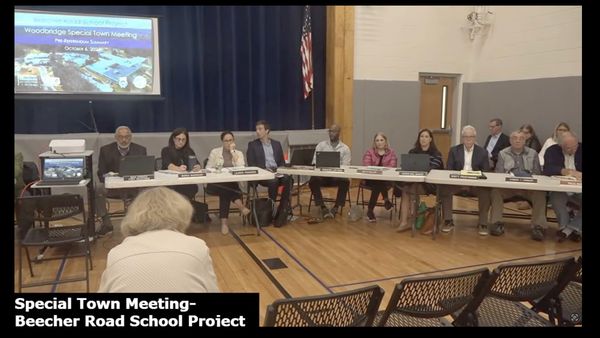
The Board also received guidance from bond counsel about the quiet period that would begin once the referendum was called. Counsel said Town resources could not be used to advocate for or against the referendum, while discussion at the Oct. 6 Special Town Meeting could include arguments on either side.
The Selectmen ultimately approved the $118.5 million appropriation and bond authorization and called an Oct. 6 Special Town Meeting followed by an Oct. 13 referendum. The vote to proceed was 4–2, with the Board’s four Democratic members in favor and its two minority-party members, Amey Marella and Andrea Urbano, opposed.
The referendum question asks whether the Town should appropriate $118.5 million for the new Beecher Road School project and authorize bonds, notes and obligations in the same amount to finance the portion not defrayed by grants. The full authorization is therefore the amount on which voters will act; the amount ultimately financed locally would depend in part on state reimbursement and other available funding. Absentee ballots will be available through the Town Clerk’s office.
With the Selectmen’s action, the referendum timetable is now in place and Town communications about the proposal have entered the quiet period. The Special Town Meeting is scheduled for Oct. 6, followed by the referendum Oct. 13.
Click below to watch WGATV's full recording of the September 23, 2026 BOS meeting.