Board Watch: Financial pressures, Beecher planning, and environmental concerns surface
Selectmen hear about drinking-water contamination near the former landfill, while stormwater drainage issues complicate business district improvements. School construction, municipal finances and academic performance also reviewed.

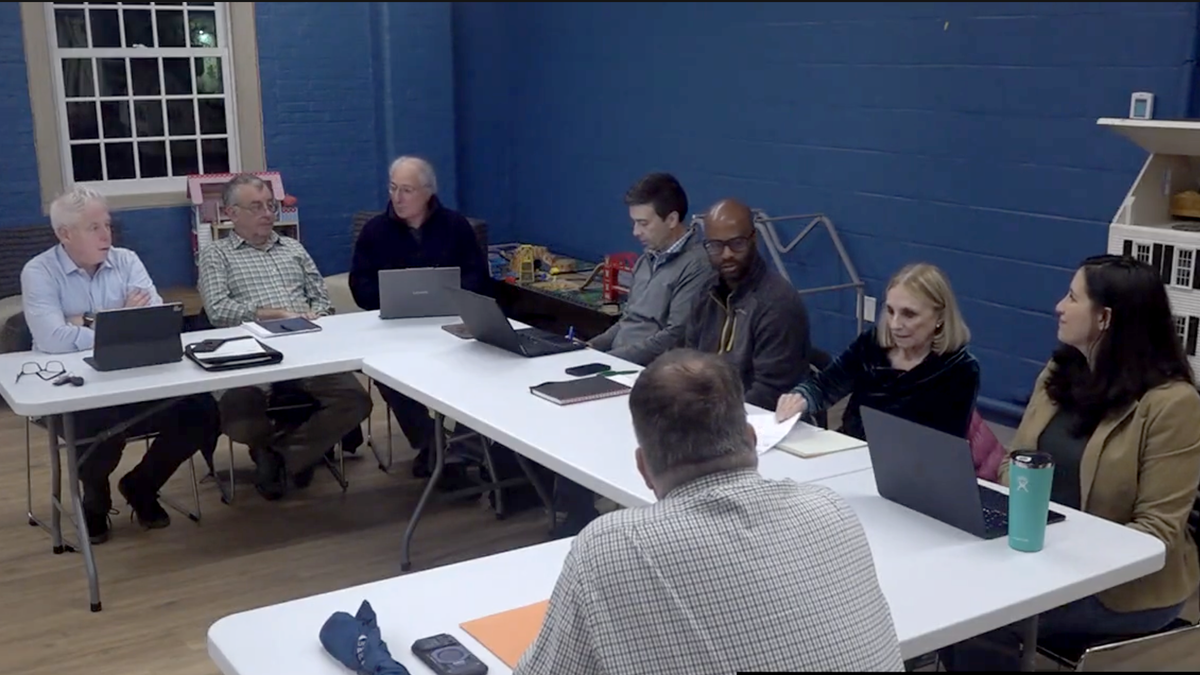
Board Watch is a recurring feature designed to provide a concise walk-through of activity as we keep track of the week's civic work. Longer-form articles will appear when issues warrant deeper coverage.
Amity Board of Education — November 9, 2026
Amity Regional School District's academic performance improved during the 2025–26 school year, but achievement gaps remain a concern, according to state accountability results presented at the Board of Education's November 9 meeting (see agenda and packet materials).
Superintendent Jennifer Byars reported that the district's accountability index rose approximately two percentage points to 83.1%. Despite improvements, Amity Regional High School received a Category 3 designation because of achievement gaps between high-needs students and their peers in English, mathematics and science. Amity Middle School Orange also received Category 3 status because one student group's testing participation fell below the state's 95% requirement. Amity Middle School Bethany retained its Category 2 designation.
The board also received an update on implementation of the district's artificial intelligence policy, following concerns raised by students earlier this year about AI-assisted grading, transparency and privacy (see WTC article March 16, 2026). Plans include establishing a student AI club or council, reinforcing restrictions against uploading student photographs into AI tools and requiring identification of AI-generated materials. Additional guidance for teachers and communications to parents are being developed.
An October 1 enrollment report showed changes in the distribution of students among Bethany, Orange and Woodbridge that will affect each town's share of Amity's 2027–28 budget. Based on this Average Daily Membership (ADM) data, with no increase in the overall budget, Woodbridge's allocation would decrease by approximately $441,500, while Bethany's would decrease by $300,600 and Orange's would increase by $742,100 (see table).
Bethany | Orange | Woodbridge | |
2025 enrollment (ADM) | 353 | 1,025 | 767 |
2026 enrollment (ADM) | 347 | 1,069 | 762 |
Change in students | −6 | +44 | −5 |
Current budget share | 16.457% | 47.786% | 35.757% |
2027–28 budget share | 15.932% | 49.082% | 34.986% |
Change in allocation | −$300,625 | +$742,114 | −$441,489 |
The board also reviewed a proposed 2027–28 school calendar, including whether to observe Lunar New Year and how to accommodate the senior internship program. A final calendar vote is expected in December. Separately, the board unanimously approved Friday, June 11, 2027, as the high school's graduation date.
In other business, members discussed preliminary planning for a district-owned student transportation van and associated staffing, without authorizing a purchase. The Facilities Committee reported on ongoing maintenance and construction projects but offered no substantive update on the approximately $35 million in middle school improvements being planned for a potential May 2027 bonding referendum (see WTC article October 26, 2026).
Click below to watch the full recording of the ABOE's November 9, 2026 meeting.
Board of Selectmen — November 10, 2026
At its November meeting, the Board of Selectmen examined rising municipal expenses and the cumulative financial implications of anticipated capital projects (see agenda).
Finance Director Anthony Genovese reported that legal spending had reached approximately $115,000 through October, nearly exhausting the annual legal budget only four months into fiscal year 2027. The board also heard that police and maintenance overtime were trending above budget, while transfer station fee revenue was below projections.
Selectmen discussed the costs of land-use litigation, Freedom of Information requests and other legal work. First Selectman Mica Cardozo said the town was reviewing ways to control legal costs. Members considered whether making more municipal records searchable online could reduce the need for formal information requests.
The board also discussed potential municipal expenses connected with the state environmental review involving a proposed apartment building at 27 Beecher Road. Genovese confirmed that sufficient funding has not yet been budgeted. Officials said they were considering delaying or reallocating some expenditures, including capital items, while awaiting more information about the state’s process and potential charges. Cardozo said the timing and billing arrangements remained uncertain.
In opening remarks, Cardozo said town officials were exploring an independent financial risk assessment of planned capital projects, including possible implications for Woodbridge’s credit rating and overall finances. The assessment was under consideration, and funding for it was not approved at this meeting.
Superintendent Christopher Montini reported enrollment of 850 students at Beecher Road School, down 11 from the previous November and three from the beginning of the school year. He described recent state test results and a state-funded breakfast pilot that began November 2 and had served an average of approximately 230 students per day during its first six days (see WTC article October 26, 2026).
Montini said the district was preparing its 2027–28 operating budget and capital requests, with his proposed budget scheduled for presentation to the Board of Education on December 10. In response to a question about the Board of Finance’s request for ten-year capital projections, he said the district was developing a comprehensive life-cycle replacement plan to guide future facilities investments, but was not yet prepared to produce a fully developed ten-year capital plan.
Beecher building committee chair Marty Halprin acknowledged voters’ rejection of the $118.5 million replacement proposal and said the committee was developing a survey to better understand residents’ concerns. He asked the selectmen to consider adding representatives from the Boards of Selectmen and Finance and an additional voting community member, preferably with architecture or project-management experience. He also requested a review of the committee’s charge and said the committee expected to seek additional funding after receiving proposals from its design and construction consultants.
During discussion, selectmen raised the need to reconsider what the committee is specifically authorized and expected to study, including clearer attention to affordability, existing facilities, renovation or partial-replacement alternatives, and the relationship between a future school proposal and the Town’s other capital commitments. Members discussed drawing on elements of the earlier Beecher Infrastructure Upgrade Building Committee’s charge rather than assuming that the next step must be another version of the rejected new-building proposal.
Several selectmen proposed convening a tri-board meeting before setting a revised direction. They suggested that the boards jointly discuss lessons from the referendum, financial parameters, the scope of alternatives and the committee’s charge together. Halprin expressed willingness to participate but urged that any pause be brief. No final revised charge or tri-board meeting date was adopted during this discussion.
During public comment, six residents of the Acorn Hill area raised concerns about contamination detected in private drinking-water wells and conditions near the former landfill site. They discussed PFAS and metals reported in well tests and cited an earlier engineering report describing drainage, seepage and holding-pond or berm concerns. Speakers questioned what the town had known, how it had responded to recommendations and what additional testing or corrective action might follow (see related Letter to the Editor).
During the next agenda item, the landfill, environmental monitoring and state involvement were discussed. It was reported that Connecticut Department of Energy and Environmental Protection (DEEP) representatives had visited the site October 26 and that a follow-up communication was expected around November 13. Selectmen discussed plans to work with environmental professionals to identify additional private wells for sampling and better understand the geographic pattern of reported detections. The need for additional investigation, clear public updates and more direct communication with affected residents was emphasized.
The selectmen then received a presentation from Leila Bagenstos of the South Central Regional Council of Governments (SCRCOG) concerning regional housing planning and Woodbridge’s choices about participation. The discussion addressed the distinction between joining a regional housing growth effort and pursuing a separate municipal approach.
Cardozo also reported that the Town was proceeding with phase-two environmental investigation of the former Country Club of Woodbridge property and that testing locations were being identified. He also said that five firms had participated in site tours related to the town’s request for expressions of interest, with submissions due December 4 (see WTC article November 2, 2026).
The board reviewed transfer station revenue, disposal fees and operating hours, including proposed fee adjustments, and possibly making permanent the summer Wednesday closure that was piloted this year. The selectmen also unanimously approved agricultural leases for the 2027 growing season, and acceptance of a state forestry grant obtained by the Conservation Commission (see WTC article November 9, 2026).
Click below to watch the full recording of the BOS's November 10, 2026 meeting.
Board of Finance — November 12, 2026
The Board of Finance discussed plans to consolidate municipal services and strengthen long-term financial planning during a November 12 special meeting, as town officials prepare the fiscal year 2027-28 budget amid growing concerns about future capital expenditures (see agenda).
Administrative Officer Scott Roberts presented a preliminary proposal to combine recreation, human services, senior services and operations at the new Community and Cultural Center under a single community services department. The reorganization would establish a director overseeing several service divisions, with the aim of reducing duplication, improving coordination and making more efficient use of existing staff and facilities.
Officials said they hope to accomplish the restructuring without adding full-time positions or increasing overall spending. Finance board members requested an analysis of potential savings and a comparison of existing departmental budgets with the proposed structure. The administration hopes to have the consolidation reflected in the budget recommendation for consideration in the fiscal year 2027–28 budget.
The board also reviewed its transition from a six-year to a ten-year capital improvement plan and an increase in the capital expenditure threshold from $5,000 to $25,000. Members emphasized the importance of realistic cost estimates, consistent prioritization across departments and distinguishing essential infrastructure replacements from less immediate projects.
Several members expressed interest in developing an integrated long-term financial model that would connect anticipated capital expenses with borrowing, debt service and operating costs. Such a model could help the Town assess how major projects affect future budgets and tax rates, particularly when spending is deferred from one year to another.
The discussion also touched on Beecher Road School's maintenance needs. A proposed $300,000 exterior painting project prompted questions about how to classify and fund large maintenance expenses that do not necessarily qualify as capital improvements (see WTC article November 9, 2026). Members raised broader concerns about deferred maintenance and the need to establish consistent standards for prioritizing work across town departments.
Finally, the board revisited the role of its representatives on the Beecher Road School Building Committee following the October referendum defeat. Members voted unanimously to appoint Paul Rossi as a second nonvoting liaison from the BOF. They also discussed the need to clarify the committee's revised responsibilities and arrangements for a tri-board meeting to coordinate the next phase of school facilities planning. No date for this meeting has been announced as of press time (check the Town website for updates).
Click below to watch the full recording of the BOF's November 12, 2026 meeting.
Economic Development Commission — November 12, 2026
Woodbridge's connectivity project is undergoing revisions following feedback from property owners, while questions raised by state transportation officials about stormwater drainage along Bradley Road and Litchfield Turnpike may require additional design adjustments, the Economic Development Commission learned at its November 12 meeting (see agenda).
EDC Chairman Cliff Lynch reported that, following feedback from property owners, the proposed eight- to ten-foot-wide multimodal path along Amity Road will now end at Landon Street rather than continue to Bradley Road. Existing sidewalks on the south side of Bradley Road will be retained, while new sidewalks will be added on the north side.
Residents of the Regency development, which straddles Bradley Road, raised concerns about pedestrian safety at a crosswalk serving the community, noting that motorists frequently fail to stop for pedestrians (see WTC article August 3, 2026). Lynch said the current plans would not include a raised crossing there and pedestrian-activated flashing lights are also not included because of the proximity to the existing traffic signal at the nearby intersection. He agreed to seek further clarification from the project's engineers and follow up with residents.
The commission also reviewed progress on several business development initiatives, including an updated database of local businesses, a proposed program of regular visits to business owners and promotional materials intended to attract new businesses to Woodbridge. Commissioners discussed using the database to identify industries already represented in town and opportunities to recruit businesses that are currently missing. The EDC's two students participating in the VOYCE program outlined a project to identify opportunities for new businesses in Woodbridge. They plan to analyze the town’s existing business mix, survey fellow students about businesses they would like to see, and identify potential locations.
In other discussions, commissioners considered arranging a joint informational session with housing and zoning officials about the Connecticut Municipal Development Authority. They also discussed the redevelopment process underway for the former Country Club of Woodbridge (see WTC article November 2, 2026), including the importance of keeping the EDC informed about prospective development proposals and identifying opportunities to expand the town's commercial tax base.
Click below to watch the full recording of the EDC's November 12, 2026 meeting.